 |
Grumman F10F Jaguar1952 |  |
| EXPERIMENTAL FIGHTER | Virtual Aircraft Museum / USA / Grumman |
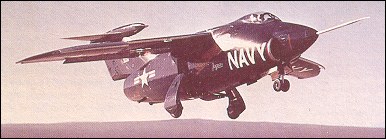 |
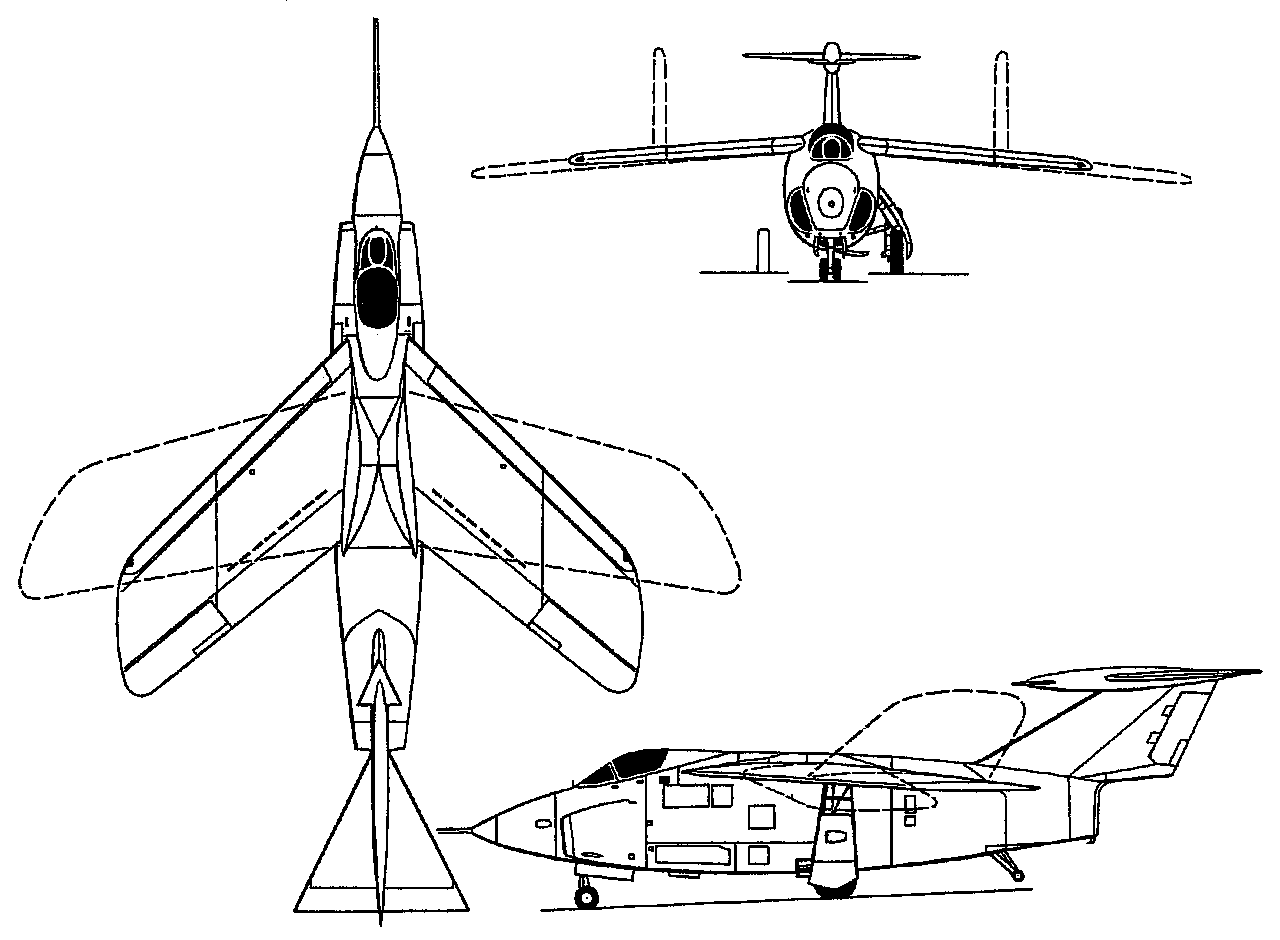
The world's first variable-sweep combat aircraft, the XF10F-1 was designed as a transonic single-seat shipboard fighter with an internal armament of four 20mm cannon and provision for an external bomb load of up to 1814kg. The sweepback angle of the wings could be varied hydraulically between 13.5° and 42.5°, and high-lift devices consisted of full-span slats and an 80% Fowler flap. The Jaguar was intended to be powered by a Westinghouse XJ40-WE-8 turbojet rated at 3357kg military thrust and 4944kg with afterburning, but when flight trials were initiated on 19 May 1952, a J40-WE-6 rated at 3084kg was fitted. Numerous problems arose during the test programme, and as some of these could not be resolved, trials terminated with the 32nd flight on 25 April 1953. Orders had been placed for 141 production F10F-1s, but these were cancelled on 1 April 1953. FACTS AND FIGURES © Unlike the variable-geometry wings on later fighters, where only the outer panel moved, the whole wing on the XF10F 'translated', with a complex arrangement of moving panels to fill the gaps. © At maximum wing sweep the directional control was marginal, not helped by the ineffective rudder. The spoiler system was so complicated it was disconnected, leaving only tiny ailerons, which gave a very poor roll response. © At full sweep the wings were only 35 degrees and the performance gains were largely negated by the extra weight of the wing sweep mechanism. © The tailplane was operated by a novel arrangement where the pilot controlled a small delta-wing airfoil at the tip of the tail bullet. This in turn moved the main elevator Unfortunately, a lag in the response between stick and surface usually resulted in a Pilot Induced Oscillation (PIO) and the Jaguar was virtually uncontrollable much of the time. © The Jaguar was another of those naval aircraft crippled by the Wesringhouse J40 engine, which underwent its own development problems and never received the intended afterburner.
|  COMPANY PROFILE | ||||||||||||||||||||||||||||||||||||||||||||||||
|


|