|
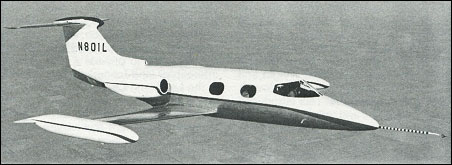
| The Swiss FFA P-16 jet fighter, cancelled by the federal government in the late 1950s, caught the attention of Bill Lear Snr, who saw in it the basis for a twin-jet executive aircraft. He initiated preliminary design work at St Gallen, Switzerland, in November 1959 and sold his electronics company to the Siegler Corporation. Lear then formed the Swiss American Aviation Corporation to develop the aircraft, known originally as the SAAC Lear Jet 23. An important objective was to keep the aircraft's gross weight below 5670kg so that it would qualify for single-pilot operation under FAA CAR.3 regulations and for air taxi operations without requiring CAB approval.
In August 1962, after the design had been finalised and tooling was in progress, Lear transferred the project to Wichita, Kansas, and renamed the organisation the Lear Jet Corporation.
In every way a stylish aircraft reflecting its fighter origins, the Learjet 23 marked a new era in 'bizjet' design, offering very high performance - if not much headroom.
The prototype made its first flight on 7 October 1963, the second and third aircraft being flown on 5 March and 15 May 1964 respectively. Following the receipt of certification on 31 July the first production Lear Jet 23 was delivered on 13 October 1964 to the Chemical and Industrial Corporation of Cincinnati, Ohio. Despite the fact that the Lear Jet was considerably smaller than the piston-engined aircraft that it was designed to replace, it more than made up for this in performance, and though intended for single-pilot operation the basic layout was for a crew of two and for five to seven passengers. The first 30 production aircraft to be completed were powered by 1293kg thrust General Electric CJ610-1 turbojets, but
the remainder of the production run of a little over 100 Lear Jet 23s had CJ610-4s of similar thrust.
| ENGINE | 2 x General Electric CJ610-4 turbojets, 1293kg |
| WEIGHTS |
| Take-off weight | 5670 kg | 12500 lb |
| Empty weight | 2790 kg | 6151 lb |
| DIMENSIONS |
| Wingspan | 10.85 m | 36 ft 7 in |
| Length | 13.18 m | 43 ft 3 in |
| Height | 3.84 m | 13 ft 7 in |
| Wing area | 21.46 m2 | 230.99 sq ft |
| PERFORMANCE |
| Max. speed | 903 km/h | 561 mph |
| Cruise speed | 781 km/h | 485 mph |
| Ceiling | 13715 m | 45000 ft |
| Range | 2945 km | 1830 miles |
| Robert Brennan, e-mail, 10.08.2024 21:39 My dad had early Lear 23. Tail was N740LJ. He died in crash near Orlando while experiencing fuel transfer issue. He also had N690LJ and another on lease for Jet International at the Atlanta Airport. After his crash in ‘67 all craft were lost. I loved the Lear as did my Dad. What a performance. reply | | Joe Moore, e-mail, 18.09.2016 05:51 Any Lear Jet pilots out there ---Please sent me E-mail --jmoore5513@aol.com reply | | joe Moore, e-mail, 18.09.2016 05:47 I am still living and 90 years old and living in Clearwater florida at 1833 Oak Forest Drive W. reply | | Sir Quenn Fonchey, e-mail, 13.03.2015 07:59 N461F was also featured in the 1967 movie, A Guide for the Married Man with Walter Matthau. reply | |
| | Roger Humiston, e-mail, 17.02.2015 17:54 David Kamrar, 20.01.2015
To whom it may concern, If anyone knows the were abouts or info on the following Learjet pilots,Joe Moore, Fred Martin,Tom Baxter,JACK Bledsoe Lee Valladero,Dennis Croninger , Frank Forest, Bob Graf,Tracy Gillman,Glenn Stinnett or Tom Niles, please contact me.
Jerry Willbeck in Rockwall KS was the EE on the electrical system and knew a lot of the early players: Jerry's number is:972 771 3883 Jerry Aguliar is a DAR in the Dallas area is another person who may know some of these guys, his number is 214 707 5343 reply |
| David Kamrar, e-mail, 20.01.2015 02:57 To whom it may concern, If anyone knows the were abouts or info on the following Learjet pilots,Joe Moore, Fred Martin,Tom Baxter,JACK Bledsoe Lee Valladero,Dennis Croninger , Frank Forest, Bob Graf,Tracy Gillman,Glenn Stinnett or Tom Niles, please contact me. I'm writing about my adventures with the early Lear23s, in which each of the pilots had a hand in. My hope is that some of these guys are still alive. Thank you in advance for any help you may provide. Respectfully, Dave Kamrar reply | | Dan Orwig, e-mail, 10.01.2015 18:20 The Learjet 23, N461F, was in the 12 /22 /1966 Batman episode titled "The Duo Is Slumming" where the Puzzler (Maurice Evans) and his henchmen fought Batman and Robin a in hangar. reply | | Mark cox, e-mail, 24.11.2013 18:37 N500H was a Learjet we used in Mesa Az from Col. James Hunley's Tbird aviation., it was a 23 or 24 in pristine condition. Wonder what became if that beautiful Learjet with all new plush interior. reply | | Mark cox, e-mail, 24.11.2013 06:07 N500H was a Learjet we used in Mesa Az from Col. James Hunley's Tbird aviation., it was a 23 or 24 in pristine condition. Wonder what became if that beautiful Learjet with all new plush interior. reply | | Mark cox, e-mail, 24.11.2013 06:02 What ever happened to our 23-048 N805LJ later N123 JB (James brown) Doug bell was our pilot back then, I'm the only one of the old band still living, reply | | Joe Moore, e-mail, 21.10.2012 18:19 Lear Jet N803LJ [ The first production lear jet sold ]
was recently sold. It was hangared at Bartow florida.
The tail number was N3BL. Was last owned by Bernie Little of Hydros Inc. I flew it from 1967.
Joe Moore reply |
| scottb60, e-mail, 08.06.2012 21:05 Most 23's have been brought up to 24 standards, jet pumps and such and quite a few have the Dee Howard wing and reverses.
With prices below $100,000 pretty common the fuel consumption might be acceptable. Watch the inspection compliance a 12 year check is pretty expensive.
With lighter weight Williams engines they could be viable for many many years. reply | | david, e-mail, 08.06.2012 03:57 i've wanted a 23 or 24 all my life, now i'm seriously thinking of buying one. anyone have ideas on which is better value for money and anyone know of a good bird for sale? best wishes, dr.p reply | | Naga, 01.06.2012 06:29 How many 23s were built? reply | |
| | Fred Shrum, e-mail, 17.07.2011 09:09 Looks like Joe Moore above flew a /c with N numbers a lot like we had at JetAmerica., DCA, i. e. N800, 801, 802, 803, 804 and 805 JA. Lotta Congressmen and Senators, and a lotta springs & wiring harnesses... reply |
| Scott Boyd, e-mail, 31.05.2011 07:34 You can probably find the episode on You Tube or Hulu.
The 23 and 24 were quite a bit different especially in systems. Electric fuel pumps replaced by Lear invented jetpumps, a refined airfoil and other changes that made the 24 a distinctly different aircraft. Subsequent Lear's 25, and 35-36 were basically the same aircraft because it worked so good.
One thing I have always remembered was the CJ-610, with King Airs, Jetstreams, Turbo Commanders, etc., an engine start meant watching for any hint of a problem, with the Lear you hit the Starter-Generator switch START Thrust Lever idle at 10% rpm. Then do whatever needs to be done and move the switch to off, with ground power or generator
without. reply | | Ben Gay III, e-mail, 31.05.2011 03:35 Jerry Dunn-
Help! How do I find the Batman and Robin episode with N461F in the background?
- Ben Gay III
bfg3@directcon.net reply | | Jerry Dunn, e-mail, 17.05.2011 05:43 I just got through watching a 1966 episode of Batman and Robin. They had a fist fight in a hangar with Lear 23, N461F as the center piece of the fight scene with Riddler and his gang.
I'm type rated in LR-JETs with 5,300 plus hours in the 23 and 24 from 1972 to 1988. I don't think I ever flew this particular Learjet though, N461F. reply | | John Hess, e-mail, 22.12.2010 21:24 Hi Ben,
I think I read a post from Art's daughter, Karen, that he and her mom had passed. I believe that 61F was scraped after suffering major damage on landing. Good to hear from you, Ben. reply | | Ben Gay III, e-mail, 08.12.2010 04:30 John Hess -
Hello, old friend!
Just curious: Is N461F still out there somewhere? Is Art Stagg still among us?
All the best!
Ben Gay III
Former President /Holiday Magic
WWW.BFG3.COM reply |
|
Do you have any comments?
|
| 
COMPANY
PROFILE
All the World's Rotorcraft
|


 Joe Moore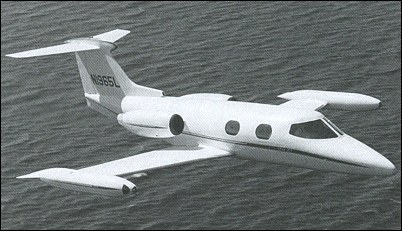


Roger, I'm still around. Started flying Lears in 1969. 24-164.
I met you at FLt Safety in the 70’s under John Holms reign. Syl Strood, Chuck Cox, Ken Elley, and many more. I knew them all. I did my initial at LGA then they moved to ICT early 70’s. Swede was the manager then.
I went on to fly various aircraft over my 51 years in aviation. I retired in 2019 @ 75 years old and living in ICT. Just turned 79 in May.
Sure miss the old gang.
Hope you are doing well. Regards, Lou
reply