|
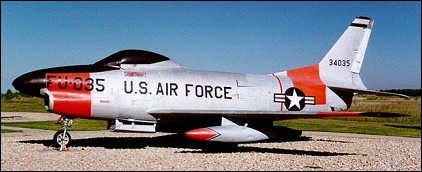
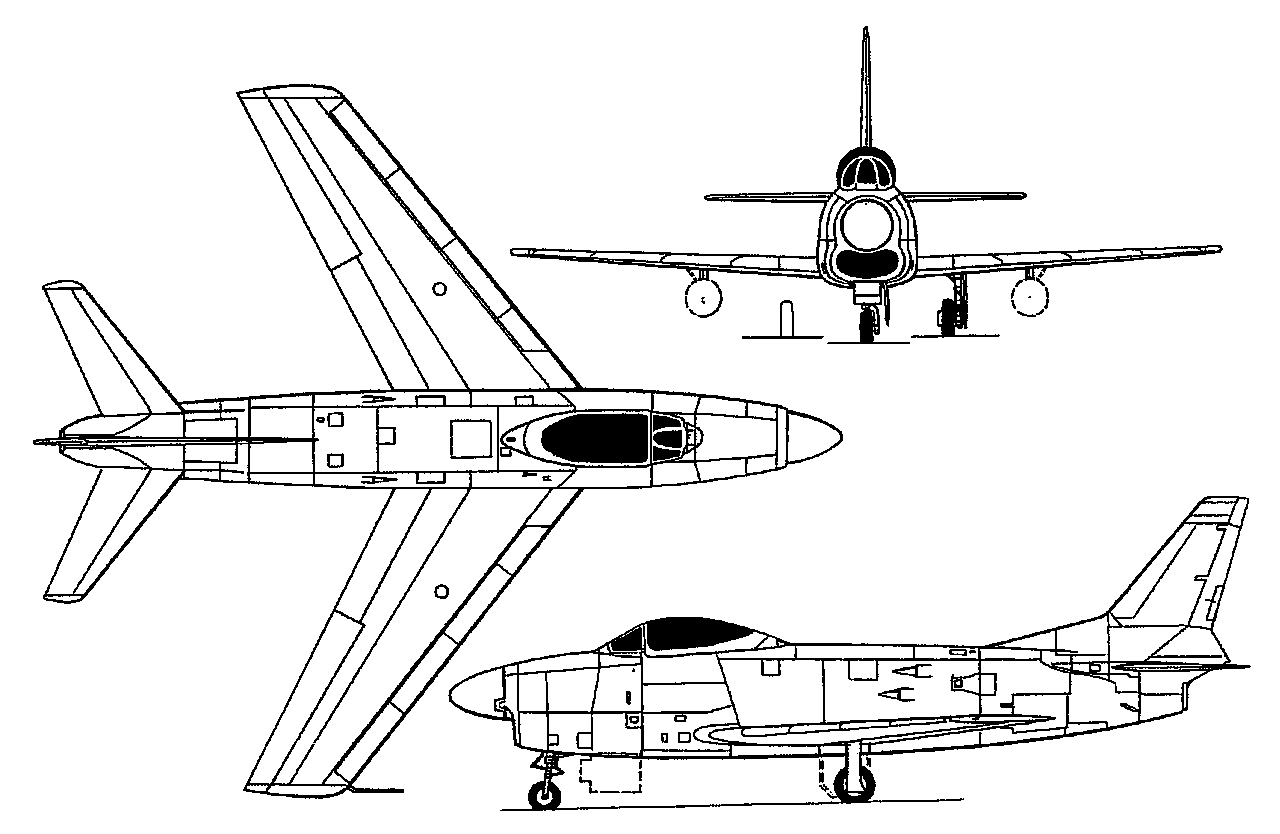
| The F-95 designation was assigned initially to the radar-equipped, all-weather interceptor version of the North American F-86 Sabre. The first two YF-95A airframes (50-577/ 578) were hastily assembled in 1949 with the nose configuration but not the radar of production aircraft. The two YF-95As also lacked the missile armament and afterburner of the production machine, being equipped instead with an extremely crude external reheat device at the exhaust for the 2460kg thrust General Electric J47-GE-17 turbojet engine. By the time the first of these machines had been completed and made its first flight on 22 December 1949 with company test pilot Joseph Lynch at the controls, it had been redesignated F-86D. Subsequent production machines were the F-86D, F-86K and F-86L.
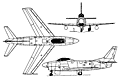 | A three-view drawing (1280 x 834) |
| De Hill, e-mail, 29.04.2020 19:39 I was stationed at Perrin AFB Texas from 1961-1962, was assigned to the 57th A&E, and was a Autopilot / Compass systems repairman on F-86l's. I was told most of our aircraft were modified F-86D's. The F-86L's went away about halfway through 1962. We already had a bunch of F-102's. Perrin was a advanced interceptor training base,
Was reassigned to Naha AB Okinawa in December of 1962. All the NAHA 86'l's were already gone.
I worked on T-33's, F-86L's, F-102's and C-130's during my time in the USAF. Sadly they have all gone to the boneyard. reply | | Joe Watkins, e-mail, 06.04.2020 22:25 Notice no one has posted anything to this site in awhile. Is it still active? I was with the 440th from 1955 to 1958. Electronic Fuel Control specialist. reply |
| Burl Hines, e-mail, 06.02.2018 01:24 Stationed at Chitose, Japan in hydraulic shop 1956-1957. Would love to hear from anyone stationed there at that time. reply |
| jim perry, e-mail, 22.11.2017 23:48 I realize that the site is for guys you worked on aircraft that have been deactivated but when the Air Force in 68 ADC WAS Almost gone.I have been looking for a long time for FIS patches without any success so I was hoping you if you would be willing to ask your members so have any patches that they would be willing to send for my collection.I hope this hope does not offend you or any of your members.Jim Perry,MSGT,usaf,Ret,9615 N Liberty Meadows Drive Summerville South Carolina 29485 reply | |
| | Bill Rose, e-mail, 15.11.2017 23:57 Arrived 317Fis Oct of 1951 radar tech for the F94a aircraft.All of 19years old any one from that time frame still around.The 318Fis was present at that time reply | | Rich Larson, e-mail, 07.09.2016 23:00 for Jim Albrecht. further info. I hung out with Joe Princo and Ray Koenig, Both were in Weather. We all went back to Erding In 1996. If anyone reading this can get in touch with Jim ask him contact me. I live in Ft. Collins,CO.--------Thanks reply | | Rich Larson, e-mail, 07.09.2016 20:55 I would like to get in contact with ExMSGT Jim Albrect. He was an email about Erding AB in Germany 1955-58 He was stationed there the same time I was, and I know the guy. When I click on his email link nothing comes up. can you help me? He is listed on the first page(1-20)just below were the photos end.The page starts out with F-86D's Hopeing to hear from you soon.............Rich reply | | Jim Ashton, e-mail, 03.05.2016 00:02 Aircraft instrument repairman Jan 57 to Jan 59 16thy FIS. Last 6 months in Formosa. went to Bunker Hill Indiana and then went back to 51st FMS F-102s. reply | | Ray Marcellus, e-mail, 01.04.2016 01:29 HAY THERE all "D" folks (That are still with us) I was on the acft in Charleston SC,'54-'55;Niagara Falls aprt. from '55 to phase out to the "dart". spent over 4 years of this time as night maint. chief. Yes I did know how to set up the manual fuel shutoff required as part of the eng installation BEFORE runup & leakck. retired as Tech in '71. reply | | John (Charlie) Segars, e-mail, 12.07.2015 19:48 Anyone who was a member of the 514th FIS Ramstein, Germany 1958-1961. Expecially Electronic Fuel Control Repairman F-86D. Sgt Schneider, Chuck Hill, etc. reply | | ross w cusimano, e-mail, 10.07.2015 05:03 Ron Biagiarelli
I was in Morocco during your tour of duty assigned to the 357 FIS, assigned to flight simulator Trng organization. Served under Gen Charles Hiems. Drop me a line. reply | | Don Lippincott, e-mail, 17.05.2015 20:00 I live on the Key Peninsula in Wa. near MaChord. I and several of my neighbors have found numerous remains of the 2 f-86D's that collided over the Carr Inlet back in Dec. of 1954. We can only find a little info on the 2 pilots that sadly lost their lives. Any info would be appreciated as we would like to Honor these men but we know so little about them. Thank You. reply | | J. Pierce, e-mail, 01.04.2015 03:17 To John Coffey, 16.11.2014 who posted on this site..
Do you remember a Maj. Edward Dudeck who flew F-86Ds when you were at Oscoda or with the 71st FIS at Greater Pittsburgh Airport..?
He was my grandfather. reply | | Nate Melber Jr., e-mail, 30.03.2015 23:46 Of all the Aircraft I crewed,94C,F86D and F102,the F86D was the best of them all.
Retired MSGT Nate Melber. reply | |
| | Hal Cusick, e-mail, 23.01.2015 21:25 Squadron-mate with Art Connor who was first USAF Sq. pilot to fire the mouse, at Yuma, 1954. We were 440th FIS "Mad Dog" Geiger then Europe. Excellent, fast, good instrument and formation airplane. Many early airplane problems were resolved in the -35s we flew four years Europe (Landstuhl and Erding). I had no engine or systems problems xcpt loss of one pod and one loss of instruments. Before getting -35, flying night take-off to East over rising residence area from Geiger without A /B was a thrill, could have flown Sandy Claus wing! HC reply | | Art Connor, e-mail, 23.01.2015 05:50 One of the initial 440th FIS pilots flying the F 86D @ Geiger AFB WA. Deployed with the squadron to +Landstuhl and subsequently to Erding Germany, rocketry @ Wheelus AFB Libia. Instructed @ Moody AFB using the F 86L. Superb weather aircraft. reply | | Nate Melber Jr., e-mail, 14.01.2015 23:59 Melber Jr.I was station at McChord field in Washington State with the 317 FIS.from Aug 1953 to Jan.1957.I was a Crew Chief on F-86D`s we were a Air Defense Command,and we received a new series of F-86 each year I was there. The tail # I was Crew Chief on was 377,I can`t member the later two.We took the rocket compaction twice a Yuma Arz.With our F-86`s.We had a great bunch guys,we were like one big family reply | | Joe Watkins, e-mail, 24.12.2014 05:53 I was a fuel control specialist with the 440th FIS at Landstuhl in 1955 and we moved to Erding in 1956 and I returned to the states in 1958. Reenlisted and went to Sioux City, IA and worked on the D until they were phased out. Went on to data processing and then computers. SAGE and AUTODIN Systems. Transfered to the Army in 1968 as a CWO and retired after Vietnam in 1974. Hosted a 440th FIS reunion here in New Orleans in 2003. Love to hear from any of the old gang. reply |
| tom yeoman, e-mail, 19.11.2014 03:34 Iwas stationed at landstuhl AFB Grmany from 1954 to 1955 as a crew chief on F86D FU-906 I was on the carrier USS Tripolie with 42 F-86D on the flight deck from San Diago to Saint Naser France we unloaded the birds and flew them to Landstuhl AFB Germany. Dischared in Sept. 1955 reply | | John Coffey, e-mail, 16.11.2014 01:22 I was stationed at Oscoda AFB with the 63rdFIS 1951 - 1953. With the 63rd I was in the comm. shop. After making S /Sgt I was X-ferd to the 71st FIS at Greater Pittsburgh Airport. There I was shop chief of Elec.Engine Control (EEC) on the very first F-86Ds to go tactical. I see that later EEC became EFC. I remember that any time an engine burped all fingers pointed @ EEC. Then later it was found to be mechanical on the engine. reply |
|
Do you have any comments?
|
| 
COMPANY
PROFILE
All the World's Rotorcraft
|


 Burl Hines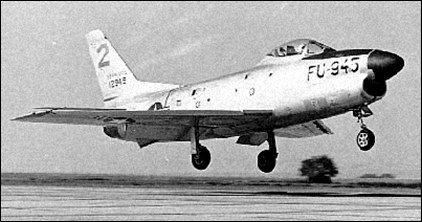


Give me a shout out
reply