|
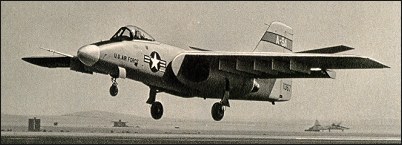
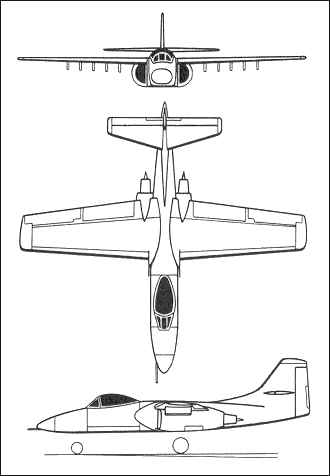
| Under the designation Northrop YA-9A, the company built two prototypes of a single-seat close-support aircraft as the company's submission for the competitive development phase of the USAF's A-X close-support aircraft competition. A cantilever high-wing monoplane, powered by two 2722kg thrust Avco Lycoming ALF 502 turbofan engines, the first of the prototypes made its maiden flight on 30 May 1972. In competitive evaluation the YA-9A lost out to the YA-10A by Fairchild Republic.
| CREW | 1 |
| ENGINE | 2 x Lycoming F-102-LD-100, 33.4kN |
| WEIGHTS |
| Take-off weight | 18160 kg | 40036 lb |
| Empty weight | 10318 kg | 22747 lb |
| DIMENSIONS |
| Wingspan | 17.7 m | 58 ft 1 in |
| Length | 16.3 m | 54 ft 6 in |
| Height | 5.2 m | 17 ft 1 in |
| Wing area | 54.9 m2 | 590.94 sq ft |
| PERFORMANCE |
| Max. speed | 740 km/h | 460 mph |
| Cruise speed | 740 km/h | 460 mph |
| Range w/max.fuel | 4800 km | 2983 miles |
| ARMAMENT | 1 x 30mm machine-guns, 7264kg of bombs and missiles |
| lucas, e-mail, 08.01.2012 16:25 só sei que agora ambos são praticalmente obsoletos e não teremos a chance de saber qual se sairia melhor.
Uma pena. reply | | Will Sutton, e-mail, 23.08.2011 02:38 I was a new Lt at Castle AFB in 1980 during a time they started building up what would become one of the biggest base museums outside of the AF museum. Vice Wing CC had connections with the A-9 /A-10 program and the 1st A-9 prototype wound up there. Then March AFB museum tried to acquire the other A-9 and Wright Pat stepped in, took possession of the other A-9 and designated Castle's museum as a branch of the AF Museum. So it's ironic that same A-9 seems to have gone to the March museum. reply | | James Plunkett, e-mail, 06.08.2011 04:03 The A-9 is at March Field Museum in Riverside, California. reply | | ACME, e-mail, 20.02.2011 20:12 Think that Northrup is a seed seller. Northrop sells planes.
The A9 engine lower so easier to service.
Think the gun same on both.
And the pilots can fly both well. reply | |
| | Jim Hoover, e-mail, 13.12.2010 09:18 The A-9 is no longer at Castle Air Museum. I dont know where it is now unfortunately reply | | SMSgt Mac, e-mail, 27.03.2010 04:40 Mr Taylor,
To achieve max payload out of the A-9, as part of Northrop's system the AF would have had to buy a new weapons adapter /launcher. Ironically, doing so would have allowed a better distribution of mass along the wing than the A-10's best performance-payload tradeoff. There's a reason one rarely sees a lot of heavy ordnance (and never a LAU-88 load) on the A-10's outer stations in photos: it wreaks havoc with the Warthog's maneuverability. reply | | Ted taylor, e-mail, 18.01.2010 23:53 While stationed at K. I. Sawyer in 1984, the new wWing Commander had breakfast with our crew on alert. He was the test pilot for the A-9. He like the aircraft and one reason it was not selected was that Northrop had designed a new bomb mounting system. If the A-9 was excepted, it could only use weapons designed for the mounting of weapons on the A-9. The A-9 was on display at Castle AFB at their museum. I assume the museum is still there after closing. reply | | Cdye, e-mail, 04.10.2009 23:19 This a little late. But I understand that several operational as opposed to policical factors favored the Warthog, including its low wing that permitted the convenience of arming straight thru from outer weapons station on one wing to the outer station on the other, and the placement of the engines in the rear, away from the fuselage and the fuel. I seem to recall reading, altho memory may not serve here, that the Warthog's engines were designed to snap aaway in flight if the were damaged hence eliminating the threat of fire or explosion from the damaged engine. But all this debate is 35 years old now, and moot because of the A-10s very fine operational record. reply | | Mark Lorenz, e-mail, 15.11.2008 10:38 Gerald,
The Soviets sure agreed with your opinion of the A-9, as I am sure you know, Sukhoi used its layout at the basis for the Su-25 Frogfoot. reply | | SMSgt Mac, e-mail, 29.10.2008 05:27 Mr Beam, I've often wondered the same the same thing, because what I know about the project reflects pretty much what you typed. My father was the A-9 Lycoming Rep on the A-X program and after spending six months with the A-9 on the hammerhead with engines running waiting for the A-10 to get fixed he was so soured in the DoD he never worked on another military program again. I joined the AF while he was at Eddy doing the A-X flyoff. Over my AF career I spent more than half of it in flight and operational test running into people who worked the program. I made a point of asking them about the program at every opportunity. The maintainers and FT engineers all liked the A-9 better, and the pilots said one 'flew like a Ford' and the other 'flew like a Chevy', although one was uncomfortable with the way the A-9 could sideslip into a target instead of banking if desired.
The A-10 is awesome in its environment, and though the A-9 approached the CAS problem from a different angle it probably would have been just as awesome. Having finished a good book early this year that I consider the 95% definitive work on the A-10, called "WARTHOG and the Close Air Support Debate", I do believe now that the A-10 was the only plane of the two that could have survived the political battles both within and without the AF to survive. Politics can be rougher than war. eh?
You and I may be the last people who remember that the A-9 had engine lubrication challenges in the first contractor flight test phase of the project but never busted a mission and went on to fly a perfect second evaluation phase 'for score'... while the A-10 seemed to break down if anybody looked sideways at it. -Best reply | | Gerald Beam, e-mail, 02.01.2008 19:53 I was an enlisted airman flying photo chase against the two prototypes of the A-9 and the A-10 during the A-X Test Program. The A-9 was a more dependable aircraft and, in my opinion as well as others, the superior plane. When the decision was made to go with the Fairchild program we were told it was because they (Fairchild) needed the contract worse than Northrup which alredy had the F-5. I have followed the successes of the A -10 and often wonder what could have been if the A-9 were chosen. reply |
|
Do you have any comments?
|
| 
COMPANY
PROFILE
All the World's Rotorcraft
|