 |
Northrop XP-56 Black Bullet1943 |  |
| RESEARCH AIRCRAFT | Virtual Aircraft Museum / USA / Northrop |
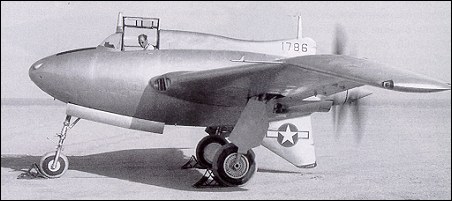 |
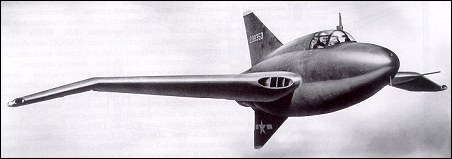
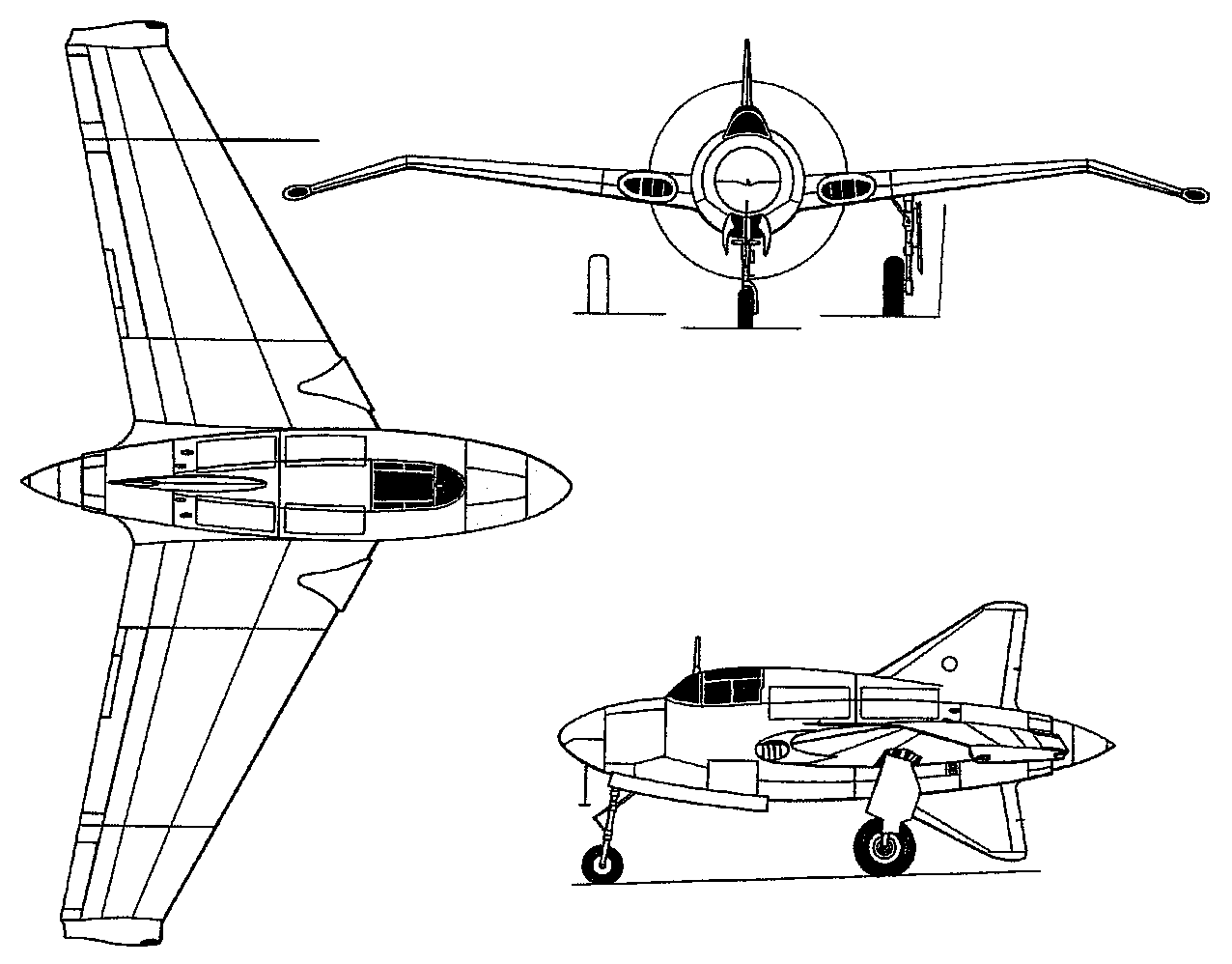
One of the most radical of US experimental fighters of World War II, the XP-56 was conceived as a result of an informal competition initiated late in 1939 for innovative fighter designs, the winning contractors being Vultee (XP-54), Curtiss (XP-55) and Northrop (XP-56). The XP-56 was a tailless pusher of all-magnesium, all-welded construction, two prototypes being ordered on 26 September 1940 and 13 February 1942 respectively. Power was provided by a 2,000hp Pratt & Whitney R-2800-29 Double Wasp 18-cylinder radial engine buried in the rear fuselage and driving contra-rotating pusher propellers. Proposed armament comprised two 20mm cannon and four 12.7mm machine guns. The first two flights were conducted on 6 September 1943, dorsal fin area subsequently being increased and flight test being resumed on 8 October, the aircraft being written-off as a result of a landing accident on the second flight of that day. The second prototype, which differed in having bellows-type, split-flap wingtip "rudders" and a further increase in dorsal fin area, flew on 23 March 1944. Lateral instability and control reversal were experienced at low speeds, and high speeds were not attainable owing to inability to obtain full power. After the 10th flight of this XP-56, the USAAF concluded that further flight testing was "too hazardous" and development was discontinued. FACTS AND FIGURES © The planned armament was four 20mm cannon and four 12.7mm machine guns in the nose, although this was never fitted. © In a later modification the ailerons were operated by bellows fed by intakes in the wingtips.
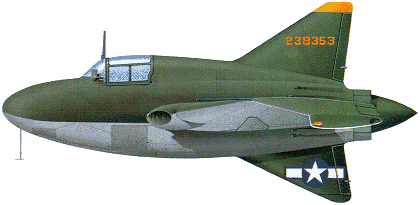 © The tail configuration would have made escape from an inflight emergency difficult. To counter this restriction an explosive severing cord would jettison the gearbox and propellers before bailout. © Northrop had expected that the downturned wingtips would provide the necessary stability, but they were mistaken. Northrop XP-56 Black Bullet on YOUTUBE
|  COMPANY PROFILE | ||||||||||||||||||||||||||||||||||||||||||||||||||||||
 Ian
Ian
|


|
Cool!
reply