 |
Northrop XP-79B Flying Ram1945 |  |
| RESEARCH AIRCRAFT | Virtual Aircraft Museum / USA / Northrop |
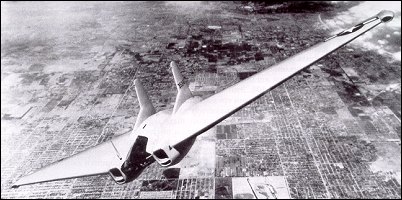 |
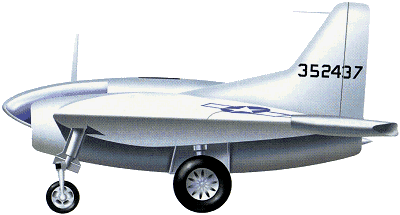
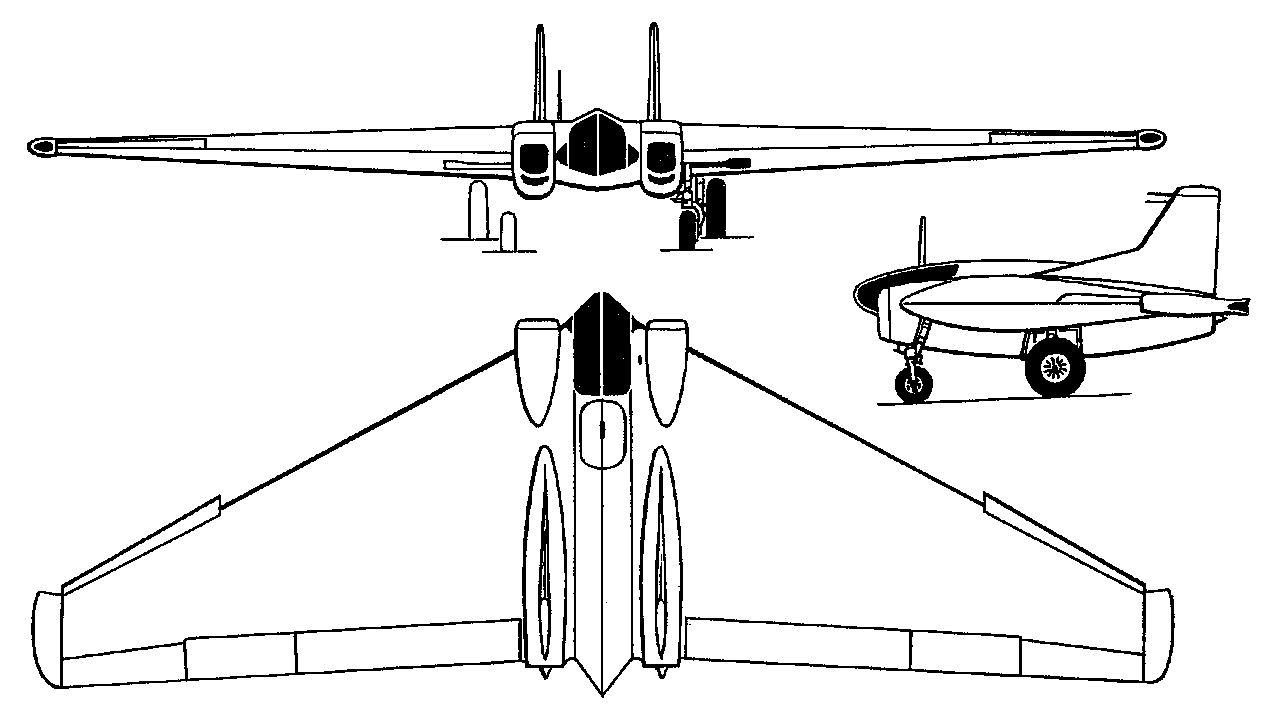
In January 1943, Northrop was awarded a USAAF contract for the design and construction of three prototypes of a highly original rocket-propelled interceptor fighter of all-wing configuration and designated XP-79. To be powered by a single 907kg Aerojet rocket motor, the XP-79 was to have accommodated its pilot in the prone position, but, in the event, development problems with the rocket led to cancellation of the project. However, a contract was placed for the redesign of the fighter for turbojet power, one prototype being ordered as the XP-79B. Manufactured of Heliarc-welded heavy-gauge magnesium plate, the XP-79B featured reinforced wing leading edges which were intended to enable it to withstand ramming attacks on the tail surfaces of enemy bombers. Provision was also made for an armament of four 12.7mm machine guns. The wing was fitted with elevons and bellows-type rudders, and power was provided by two 619kg Westinghouse 19B turbojets. The XP-79B was flown for the first time on 12 September 1945, but in a climbing turn during its second pass over Muroc Dry Lake, an inadvertent roll was followed by a stall and then a spin from which the pilot was unable to recover, and following this accident the programme was cancelled. FACTS AND FIGURES © The XP-79B's pilot lay in a prone position, theoretically giving tolerance of up to 20g. Although the intention was to strike enemy aircraft using the leading edges of the wings, finding volunteers to dive on enemy bombers head first in a plastic bubble may have proved difficult. © The XP-79B's structure was largely magnesium, assembled using Northrop's patented Heliarc welding process. © The pilot controlled the ailerons with a tiller bar in front of him and rudders mounted at his feet, which worked the opposite way to normal. Intakes at the wingtips supplied air for the unusual bellows-boosted ailerons. Northrop XP-79B Flying Ram on YOUTUBE
|  COMPANY PROFILE | |||||||||||||||||||||||||||||||||||||||||||||||||||
|


|