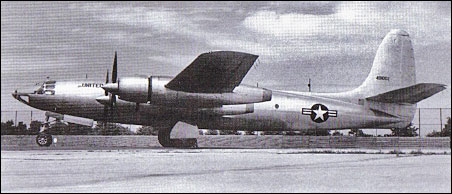
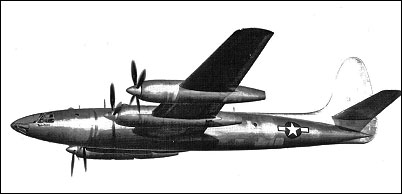
Designated XF-12, when F stood for 'photo' in the pre-1947 system, and
later XR-12, the Rainbow was a high-speed high-altitude reconnaissance
aircraft, intended to scout targets over Japan for the B-29s. This may have
happened if the programme had started earlier, because when the war ended
with the atomic bombings, the first aircraft was only partly complete.
Republic still hoped to make the Rainbow into a 46-seat airliner, which they
called the RC-2. Their selling point was speed, for which customers would pay
a premium. Unfortunately, the expected postwar boom was not immediate
and the airlines bought the slower but roomier DC-4 and Boeing 377 instead.
An XR-12 was not delivered to the Air Force until late 1948, but crashed on
its second test flight. The other Rainbow was sent to a gunnery range.
It has been claimed that the Rainbow was the fastest piston-engined, 4-engine aircraft ever built. If it wasn't, it must have come pretty close.
The only other aircraft built to meet the same AAF requirement for which the Rainbow was built was Howard Hughes' twin-engine XF-11, which was the aircraft in which Hughes was nearly killed when he it crashed during it's maiden flight. In the end, the AAF didn't buy either of those aircraft because, by then, the war was over and they simply weren't needed.
Pan American World Airways seems to have expressed interest in this proposal. This would have been one of the most elegant airliners aside from the Lockheed Constellation to grace the skies: rides.webshots.com /photo /2501471570048918155xwsbOi