|
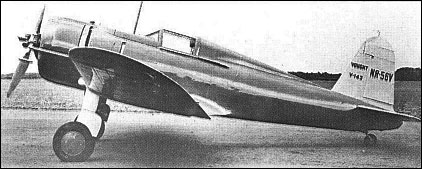
| The V-141 having acquired a somewhat alarming reputation,
the aircraft was redesignated V-143 and, with
modifications to the tail unit, entered in an Argentine
fighter contest. As the spinning characteristics of the
fighter were still unsatisfactory, the prototype was fitted
with an anti-spin chute before demonstration, a fact
of which a competing manufacturer made capital. In
May 1937, in an attempt to improve the marketing prospects
of the V-143, a number of engineering changes
were introduced. The rear fuselage was lengthened
considerably and an SB2U-1-style tail assembly was fitted
in an attempt to eradicate the handling shortcomings
of the fighter. At the same time, a Pratt & Whitney
R-1535-SB4G engine of 825hp was installed. The
USAAC evaluated the modified prototype on 18 June
1937, but again rejected the aircraft. As no export
orders for the fighter - which was also offered with a
525hp Wasp Junior engine as the V-150 - materialised,
the sole V-143 prototype was sold to the Japanese Imperial
Navy, which assigned it the designation AXV1.
Although it was later to be widely alleged that the Mitsubishi
A6M Zero-Sen was based on the V-143, there
was no truth in such allegations, although Vought's
method of undercarriage retraction provided the inspiration for that of the Japanese fighter.
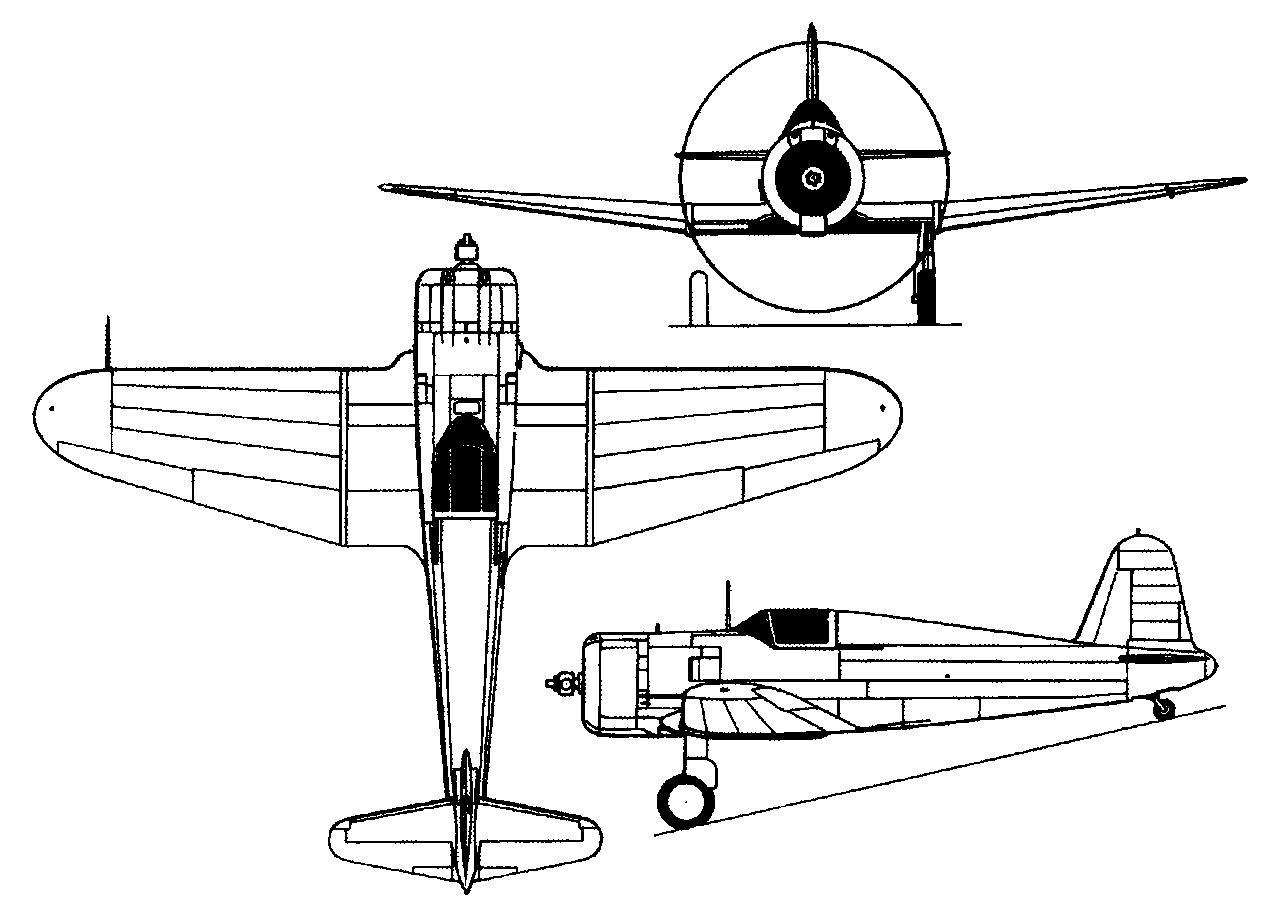
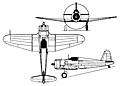 | A three-view drawing (1280 x 916) |
| WEIGHTS |
| Take-off weight | 1982 kg | 4370 lb |
| Empty weight | 1583 kg | 3490 lb |
| DIMENSIONS |
| Wingspan | 10.21 m | 34 ft 6 in |
| Length | 7.92 m | 26 ft 0 in |
| Height | 2.84 m | 9 ft 4 in |
| Wing area | 17.37 m2 | 186.97 sq ft |
| PERFORMANCE |
| Max. speed | 470 km/h | 292 mph |
| Range | 1300 km | 808 miles |
| Anonymous, 21.11.2022 16:25 "...it was later to be widely alleged that the Mitsubishi A6M Zero-Sen was based on the V-143..." Similar allegations were made concerning the Seversky 2PA (several of which were sold to Japan) and the Hughes H-1 racer. However, there was no truth to any of those allegations. reply | | John Kress, jwkress47@yahoo.com, 27.12.2020 16:21 Assuming that the Japanese designer used the Vought V-143 as a starting point he made excellent design changes to convert a plane no one wanted into a thoroughbred killing machine. reply |
| BHH, 15.04.2015 20:21 @ Blair. Yes, EXACTLY. Except the shape of the wing is very different. This one a straight leading edge, the Zero tapers both leading and trailing edges. Also the shape of the forward fuselage from the canopy to the engine is totally different. Also the shape of the vertical tail is dramatically different in taper than the zero. Also the aft fuselage below the tail is fatter on this than the zero. Also, as you said the razorback fuselage is totally different. Also the landing gear and wheel arrangement is reversed from the zero.
But other than all that, yeah... um... totally the same. reply | | blair, e-mail, 07.12.2014 02:57 It does look exactly like a razorback Zero! I think the USAAF just did not want to admit they turned down a good design! reply | |
| | joe, 29.08.2009 05:39 no comment reply |
|
Do you have any comments?
|
| 
COMPANY
PROFILE
All the World's Rotorcraft
|



Jiro Horikoshi didn't use the V-143 as a starting point for the A6M, the Northrop /Vought design has nothing to do with the Zero, even the landing gear claim is dubious.
reply