|
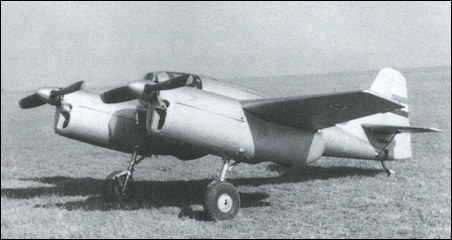
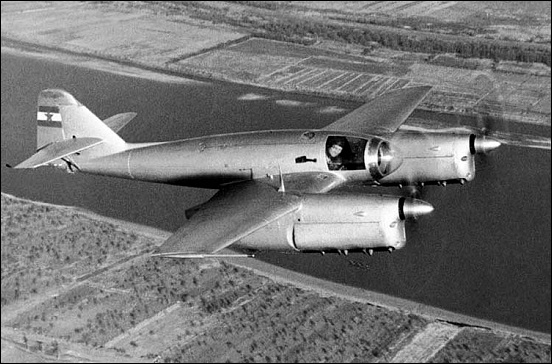
| Prone-pilot research aircraft.
| CREW | 1 |
| ENGINE | 2 x 160hp Walter Minor 6/III piston engines |
| WEIGHTS |
| Take-off weight | 1107 kg | 2441 lb |
| Empty weight | 985 kg | 2172 lb |
| DIMENSIONS |
| Wingspan | 6.70 m | 22 ft 0 in |
| Length | 4.66 m | 15 ft 3 in |
| Height | 2.32 m | 8 ft 7 in |
| Wing area | 8.10 m2 | 87.19 sq ft |
| PERFORMANCE |
| Max. speed | 335 km/h | 208 mph |
| Cruise speed | 275 km/h | 171 mph |
| Ceiling | 4750 m | 15600 ft |
| Range | 258 km | 160 miles |
| ARMAMENT | 2 x 13mm MG 131 machine guns |
| lxbfYeaa, e-mail, 17.01.2026 17:53 20 reply | | lxbfYeaa, e-mail, 17.01.2026 17:53 20 reply | | Bjorn Verheijden, e-mail, 22.12.2017 20:50 The Belgrade aircraft museum has one on display. Interesting little plane. reply | | CHOLET, e-mail, 12.05.2009 15:27 The designation Ikarus 451 covers a family of six research aircraft designs built in Yugoslavia in the 1950s, all sharing the same basic airframe, but otherwise quite different from each other. One member of the family Ikarus 451M became the first domestically-built jet aircraft to fly in Yugoslavia, on 25 October 1952.
The first aircraft built under this designation was a propeller-driven aircraft that accommodated the pilot in prone position. It was an otherwise conventional low-wing monoplane with retractable tailwheel undercarriage, the main units of which retracted backwards into the engine nacelles mounted below the wings. This flew in 1952, and by the end of the year was followed by the 451M (Mlazni - "Jet") which had conventional seating for the pilot and in place of the two Walter Minor 6-III inline engines of the original Ikarus 451 (which has two inverted Walter six-cylinder piston engines of 118 kW (158 bhp) each, 6.7m (22 ft) wingspan, a maximum speed of 335 km /h (182 knots) and a ceiling of 4750m (15,570 ft).) was fitted with Turboméca Palas turbojets. In this version, the undercarriage retracted inwards. Provision was made to carry one 20 mm Hispano Suiza 404A cannon under the fuselage, plus six RS rockets under the wings. Further developments were aimed at developing a viable military aircraft from this basic design. reply |
|
Do you have any comments?
|
| 
COMPANY
PROFILE
All the World's Rotorcraft
|