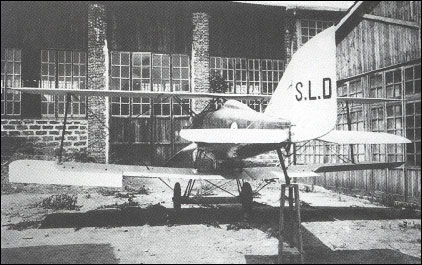
The history of the **Officine Ducrot** in Palermo represents a remarkable transition from high-end craftsmanship to cutting-edge military aviation. Originally established by Vittorio Ducrot, the workshops gained international fame at the turn of the 20th century for producing exquisite Art Nouveau (*Stile Liberty*) furniture and luxurious ship interiors, heavily collaborating with the architect Ernesto Basile and the prominent Florio family. ### The World War I Pivot: "Vittoria Aeronautica Ducrot" When Italy entered World War I in 1915, the wartime economy demanded industrial conversion. In 1916, Vittorio Ducrot partnered with the Florio family to adapt his massive woodworking workshops for aviation, founding **Vittoria Aeronautica Ducrot**. The transition was logistically seamless: the company already possessed elite woodworkers, specialized machinery, and advanced understanding of complex wooden structures—the primary material for aircraft at the time. * **Licensed Flying Boats:** The company initially specialized in building seaplanes under license to support the Regia Marina (Royal Italian Navy). Their primary wartime production line consisted of the **FBA Type H**, a French-designed biplane flying boat used extensively for maritime reconnaissance. * **Local Testing Grounds:** Because the aircraft were seaplanes, Ducrot established testing and assembly protocols right on the coast. Completed flying boats were transported to the nearby gulf of Mondello for their trial flights and military certifications. * **The Ducrot SLD Prototype:** Hoping to move beyond licensed production, Ducrot hired aeronautical engineer Manlio Stiavelli and structural engineer Guido Luzzatti to design an original, indigenous Italian fighter. The resulting aircraft—the **Ducrot SLD**—was completed in the summer of 1918. It featured a highly advanced, aerodynamically clean plywood monocoque fuselage powered by a 200 hp Hispano-Suiza engine. The prototype achieved an impressive speed of 300 km/h (186 mph) during its maiden flight in October 1918, but the Armistice in November abruptly ended military interest before it could enter mass production. ### Interwar Evolution and Aeronautica Sicula Following a brief post-war return to luxury furniture, the looming threat of World War II prompted a second, more permanent shift back to aviation. In 1935, Vittorio Ducrot collaborated with the legendary aviation pioneer Giovanni Battista Caproni. In 1936, this partnership led to the creation of **Aeronautica Sicula S.A.**, permanently converting the bulk of the Zisa furniture factories into a high-capacity aircraft plant. * **Mass-Producing the "Gabbiano":** Aeronautica Sicula became a primary manufacturer for the **CANT Z.501 Gabbiano**, a single-engine parasite-reconnaissance flying boat. The Palermo plant successfully built and delivered over 200 units of the Z.501 to the Italian Air Force. * **Maintenance and Repair:** Beyond assembling new aircraft, the facility operated as a major maintenance hub for the Mediterranean theater, managing the heavy overhaul and structural repair of Italy's iconic three-engine bomber, the **Savoia-Marchetti S.M.79 Sparviero**. * **The Allied Invasion:** Production continued intensely until the Allied invasion of Sicily in 1943. When Allied forces captured the factory, they discovered a dozen incomplete CANT Z.501 airframes, which were subsequently finished and repaired to serve the Italian Co-Belligerent Air Force alongside the Allies. ### The Legacy Today Following the war, the plant moved away from aviation and transitioned to manufacturing railway rolling stock before closing permanently in the late 20th century. Today, the vast industrial pavilions where these aircraft were built have been preserved and transformed into the Cantieri Culturali Alla Zisa (Zisa Cultural Shipyards). This sprawling compound serves as Palermo's primary cultural citadel, hosting art exhibitions, cinema centers, and open-air creative hubs within the same historic architectures that once housed WWI flying boats and WWII bombers.
Ublomor, e-mail, 25.07.2026 16:51
The history of the **Officine Ducrot** in Palermo represents a remarkable transition from high-end craftsmanship to cutting-edge military aviation. Originally established by Vittorio Ducrot, the workshops gained international fame at the turn of the 20th century for producing exquisite Art Nouveau (*Stile Liberty*) furniture and luxurious ship interiors, heavily collaborating with the architect Ernesto Basile and the prominent Florio family. ### The World War I Pivot: "Vittoria Aeronautica Ducrot" When Italy entered World War I in 1915, the wartime economy demanded industrial conversion. In 1916, Vittorio Ducrot partnered with the Florio family to adapt his massive woodworking workshops for aviation, founding **Vittoria Aeronautica Ducrot**. The transition was logistically seamless: the company already possessed elite woodworkers, specialized machinery, and advanced understanding of complex wooden structures—the primary material for aircraft at the time. * **Licensed Flying Boats:** The company initially specialized in building seaplanes under license to support the Regia Marina (Royal Italian Navy). Their primary wartime production line consisted of the **FBA Type H**, a French-designed biplane flying boat used extensively for maritime reconnaissance. * **Local Testing Grounds:** Because the aircraft were seaplanes, Ducrot established testing and assembly protocols right on the coast. Completed flying boats were transported to the nearby gulf of Mondello for their trial flights and military certifications. * **The Ducrot SLD Prototype:** Hoping to move beyond licensed production, Ducrot hired aeronautical engineer Manlio Stiavelli and structural engineer Guido Luzzatti to design an original, indigenous Italian fighter. The resulting aircraft—the **Ducrot SLD**—was completed in the summer of 1918. It featured a highly advanced, aerodynamically clean plywood monocoque fuselage powered by a 200 hp Hispano-Suiza engine. The prototype achieved an impressive speed of 300 km/h (186 mph) during its maiden flight in October 1918, but the Armistice in November abruptly ended military interest before it could enter mass production. ### Interwar Evolution and Aeronautica Sicula Following a brief post-war return to luxury furniture, the looming threat of World War II prompted a second, more permanent shift back to aviation. In 1935, Vittorio Ducrot collaborated with the legendary aviation pioneer Giovanni Battista Caproni. In 1936, this partnership led to the creation of **Aeronautica Sicula S.A.**, permanently converting the bulk of the Zisa furniture factories into a high-capacity aircraft plant. * **Mass-Producing the "Gabbiano":** Aeronautica Sicula became a primary manufacturer for the **CANT Z.501 Gabbiano**, a single-engine parasite-reconnaissance flying boat. The Palermo plant successfully built and delivered over 200 units of the Z.501 to the Italian Air Force. * **Maintenance and Repair:** Beyond assembling new aircraft, the facility operated as a major maintenance hub for the Mediterranean theater, managing the heavy overhaul and structural repair of Italy's iconic three-engine bomber, the **Savoia-Marchetti S.M.79 Sparviero**. * **The Allied Invasion:** Production continued intensely until the Allied invasion of Sicily in 1943. When Allied forces captured the factory, they discovered a dozen incomplete CANT Z.501 airframes, which were subsequently finished and repaired to serve the Italian Co-Belligerent Air Force alongside the Allies. ### The Legacy Today Following the war, the plant moved away from aviation and transitioned to manufacturing railway rolling stock before closing permanently in the late 20th century. Today, the vast industrial pavilions where these aircraft were built have been preserved and transformed into the Cantieri Culturali Alla Zisa (Zisa Cultural Shipyards). This sprawling compound serves as Palermo's primary cultural citadel, hosting art exhibitions, cinema centers, and open-air creative hubs within the same historic architectures that once housed WWI flying boats and WWII bombers.
lxbfYeaa, e-mail, 14.03.2024 06:09
20
Barry, 31.05.2016 15:22
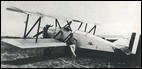
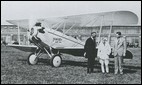
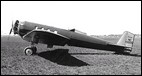
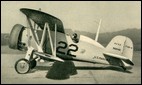
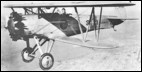
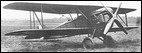
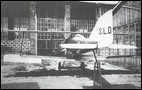
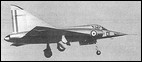
Designed by Manlio Stiavelli and Guido Luzzatti, hence SLD this fighter was the first original design from Ducrot who had upto that time been involved in the license manufacture of flying boats and parts for other manufacturers. It was aerodynamically clean and showed good performance, but no authenticated data remains.
Power Plant 1 x 200 h.p. Hispano Suiza 8B V8 water cooled
Wing area 240 sq ft Empty weight 1,345 lb Gross weight 1,785 lb Max speed 186 mph
Fatal error: Uncaught Error: Undefined constant "isMob" in /data03/virt15346/domeenid/www.aviastar.org/htdocs/comments/comments.php:165
Stack trace:
#0 {main}
thrown in /data03/virt15346/domeenid/www.aviastar.org/htdocs/comments/comments.php on line 165