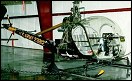
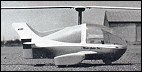
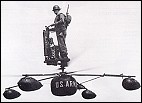
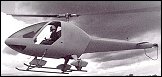
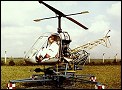
I had worked on the Rotor Craft's Dragon Fly. I was drafted into the Army and received piloting instructions in the Bell 47, and the Sikorsky H-19. Leaving the Army, I worked for World Wide Helicopters in Papua and Assam. Inventor Gilbert Magill offered me the job of test flying the Pinwheel. I then met and married an Australian girl in Sydney. This delayed my return to the USA. Fortunately I didn't get to test the Pinwheel, as time was very important to the Pinwheel project. Saved again!
Shooter, e-mail, 29.06.2013 09:33
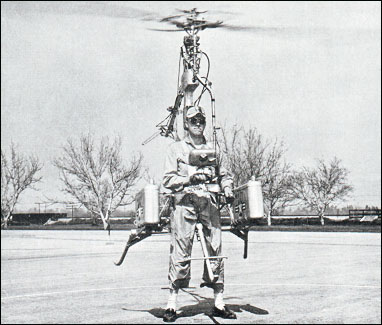
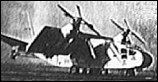
It ran on 90% hydrogen peroxide push over silver screen. There was another version with a small engine in the rear that turned a propeller that greatly increased its speed and range.
Tsheten Dorji, e-mail, 22.05.2013 10:23
if this contraption is running on tip jet rotors,what's the need for the tail rotor?..is the tail rotor for yaw control?..
GABRIEL, e-mail, 28.12.2012 03:32
bueno realmente ,hay un error en el texto pues no utilizaban hidrogeno liquido como dice el articulo, lo que utilizaron fue peroxido de hidrogeno al 90 % que es un combustible utilizado en coheteria el cual reacciona al pasar por una malla de platino que funciona como catalizador, realmente en mi concepto es un prototipo perfecto pues no utilizaba motor convenciona, ni sistemas de engranajes, ni electricos nada . solo se necesitaban 7 seg,desde que se daba paso a los monopropulsores y listo
hélio, e-mail, 12.11.2009 07:44
this could really be better , nitrogen is to dangerous to have in a war machine , and it should have at least 2 person one to manage other o shoot .
Aaron Helwig, e-mail, 08.07.2008 19:00
This is a neat design for one person, but I was thinking about have more room in the back for a faster and more powerful engine, eventhough I don't know how much power it would need. At first the engine would run on some thing more typical, like gas or alcahol, until it would be advanced enough to run on something different, like compressed air or use solar panels.