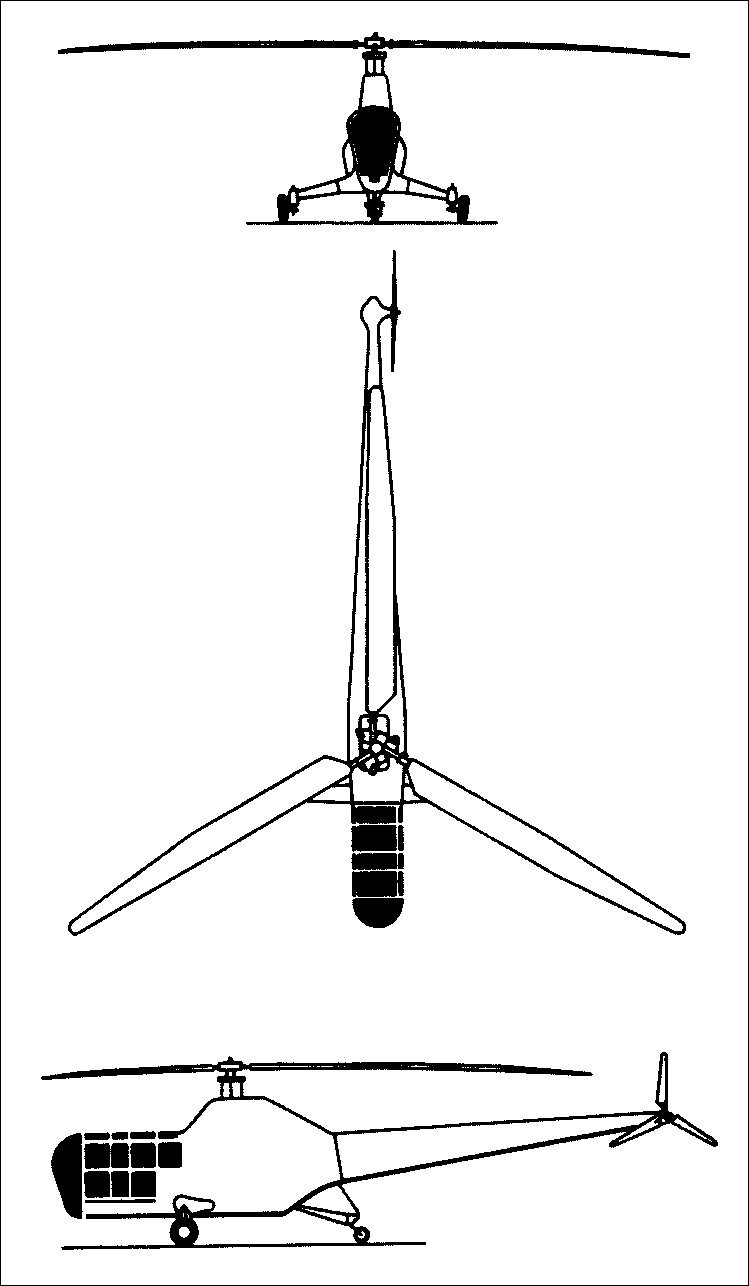
| Sikorsky R-5 / HO2S 1942 |  |
 |
|
| Sikorsky R-5 / HO2S 1942 | |
|
|
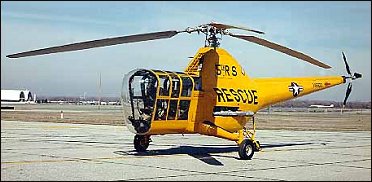
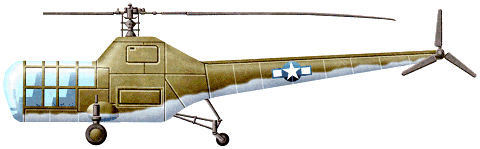
The first helicopter to be built in large numbers was a derivative of the Sikorsky R-5, which started out as a tandem two-seater. The first of five prototypes flew on 18 August 1943 powered by a 450hp Wasp Junior radial. This was followed by 25 YR-5A pre-production models, two of which were assigned to the Navy under the designation HO2S-1. While production of the R-5A was getting under way (34 built), five pre-series aircraft were converted into the R-5E, which had dual control, while at least 20 modified R-5As were later given new, 600hp Wasp Junior engines and redesignated R-5D. From the latter, the S-51 was developed, with a slightly enlarged four-seat cabin and a tricycle landing gear. The first commercial helicopter designed by Sikorsky, it first flew on 16 February 1946 and was certified a month later by the Civil Aviation Agency and delivered to the first customer in August. It was sold to United Air Lines and Los Angeles Airways. A total of 300 S-51s were built, some with 450hp engines, others with 600hp engines and larger diameter three-blade rotors. The military versions were designated R-5F (11 to the USAF), H-5G (38 fitted with a rescue hoist), H-5H (17 with amphibious wheel/pontoon landing gear), HO3S-1 and S2 (90 in all, naval rescue version). The S-51 had a three-blade articulated rotor, the blades of which could be folded back to facilitate stowage. The first aircraft had manual pitch control; this was later replaced by a hydraulic system. The cabin diameter was also increased. In 1947, Westland acquired the license to build the S-51 in Britain and produced 139 up to 1953. The British version, named the Dragonfly, had a 550hp Alvis Leonides engine. G.Apostolo "The Illustrated Encyclopedia of Helicopters", 1984 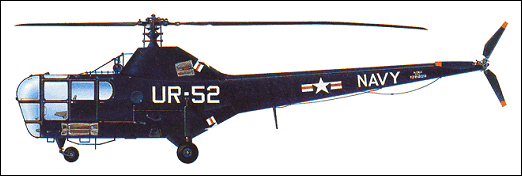
|