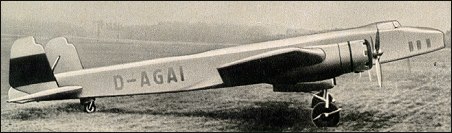
This plane was copied from the English Short Sterling but couldn't carry as many torpedos.
Hank, e-mail, 11.10.2011 08:20
10/11/11
Though MG Walther Wever lost his life in a rushed take-off attempt from addressing Air Cadets to making a timely arrival in order to attend a friend's funeral, the import of his Strategic Heavy-Four-Engine Bomber doctrine remained in regulations as Operational Order 16, this regulation being held as active until the close of World War 11.
The lack of the Strategic Bomber in numbers required from what I'd been able to learn of the mission requirements struck me as an historical nexus requiring some investigation. Literature where the questions are addressed directly might be found at:
The Luftwaffe: Creating the Operational Air War, 1918-1940, James S. Corum, 1997 ISBN: 0-7006-0836-2
Heinkel, Ernst. Stormy Life: Memoirs of a Pioneer of the Air Age. New York: Dutton, 1956. Heinkel was no apologist in this text, though as with many texts authored by those on the losing side much is omission. Reconsideration of Goering's mistakes addressed by Hitler in 1943 to Heinkel. I hold to my consideration of Heinkel as the #1 aircraft engineer of the 20th Century.
Reich Minister Albert Speer was very much an eye-witness to the addressing of German Military Aviation failures, his position as Charge of Materials requiring his presence at all meetings regarding Luftwaffe production. Insight into the addressing of the Heavy Bomber in Inside the Third Reich, Speer's journal assembled while he was an Allied prisoner.
Former Luftwaffe Operations Staff menber Paul Deichmann wrote the text referenced below as a thesis for the United States Airforce. Of all reference material easily available on the topic, this one is closest to the bone. Deichmannn was present at all Upper-Level discussion, questioning FM Hermann Goring regarding the maintainance of the Heavy Bomber in inventory. Goring, as with Kesselring, both influenced by Udet, that the light aircraft in mass usage afforded the greatest projection of force Germany could economically muster. The funding for the Do-19 and Ju-89 were terminated on April 29, 1937 on Goerings express order, the success of light bombers at Guernica two days earlier and Japanese success in China with the type.
Goering seemed to have been dazed to the facts as they later fell. War with Russia entailed having to overfly a country with thirteen time zones, the choice target of Soviet Hydro-Electric Power generation requiring more than ol' Hermann had on tap. Of course the USA would jump in, supplying the British, as she had before. Aircraft of heavy construction for maritime assault on the Allied supply line was missing due to inventory failures. Regards
Spearhead for Blitzkrieg 1939-1945, Paul Deichmann ISBN: 10-1853672416
Angela, 18.06.2011 10:39
mounted in nacelles at the wing leading edges. Accommodation was provided for a crew of nine, consisting of pilot, co-pilot/navigator, bomb-aimer, radio operator and five gunners.
Fatal error: Uncaught Error: Undefined constant "isMob" in /data03/virt15346/domeenid/www.aviastar.org/htdocs/comments/comments.php:165
Stack trace:
#0 {main}
thrown in /data03/virt15346/domeenid/www.aviastar.org/htdocs/comments/comments.php on line 165