|
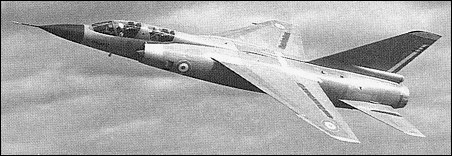
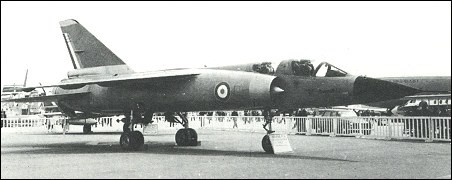
| Early in 1964, Dassault was awarded a contract to develop
a successor to the Mirage III with emphasis on
the low-altitude penetration role, and an order followed
for a single prototype of a tandem two-seat aircraft
which it was intended to power with the SNECMA
(Pratt & Whitney) TF-306 turbofan. Despite minimal resemblance
and relationship to the delta-winged series
of aircraft, the new fighter, which featured a high-mounted
swept wing with horizontal tail surfaces, was
assigned the designation Mirage F2 and was flown on
12 June 1966. Initial flight trials were conducted with a
Pratt & Whitney TF30 turbofan rated at 8400kg with afterburning. After being re-engined
with a TF-306 of 9000kg, it attained
M=2.0 on its second flight, on 29 December 1966. Work
had begun on a single-seat version, the Mirage F3 with
a 10350kg TF-306E engine, but changes
in Armee de l'Air requirements saw interest transferred
to a scaled-down and simpler version of the basic
design, the Mirage F1, development of which had been
pursued in parallel by Dassault, and further development
of the Mirage F2 was discontinued.
| ENGINE | 1 x Pratt & Whitney TF30 turbofan, 9000kg |
| WEIGHTS |
| Take-off weight | 18000 kg | 39683 lb |
| Empty weight | 9500 kg | 20944 lb |
| DIMENSIONS |
| Wingspan | 10.5 m | 34 ft 5 in |
| Length | 17.6 m | 58 ft 9 in |
| Height | 5.8 m | 19 ft 0 in |
| PERFORMANCE |
| Max. speed | 2333 km/h | 1450 mph |
| Ceiling | 20000 m | 65600 ft |
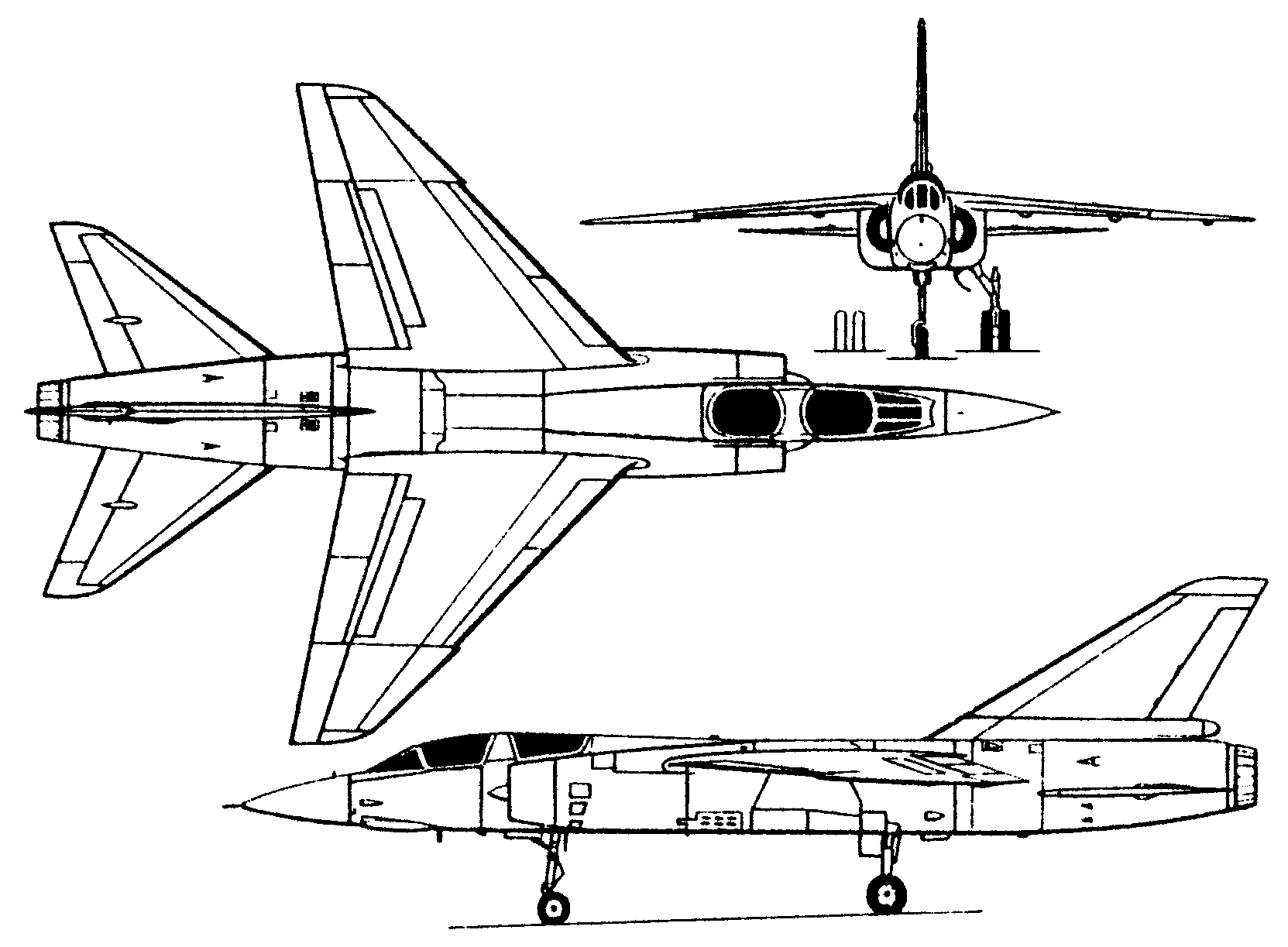
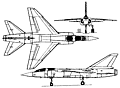 | A three-view drawing (1663 x 1223) |
| grahamclayton, e-mail, 07.05.2023 06:18 What is the bulge at the base of the vertical stabilizer? reply |
|
Do you have any comments?
|
| 
COMPANY
PROFILE
All the World's Rotorcraft
|