|
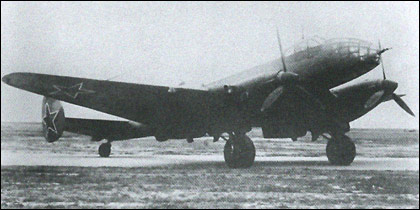
| Designed by V. G. Yermolayev, previously a member of the design team concerned with the STAL series of aircraft, the DB-240 long-range bomber prototype was flown for the first time in June 1940. A second prototype followed in September , by which time preparations for mass production at Voronezh were in hand, but the German invasion led to evacuation of the factory in July 1941, by which time 128 examples of the DB-240 had been delivered under the designation Yermolayev Yer-2.
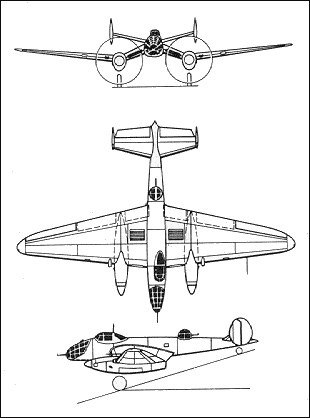
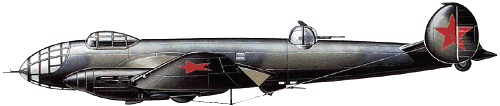
An all-metal mid-wing monoplane of inverted gull-wing configuration and with a twin fin-and-rudder tail unit, the Yer-2 had tail-wheel landing gear, the main units retracting into the nacelles of its two M-105 engines; accommodation was provided for a crew of four.
By the autumn of 1941 the Yer-2 was in action with two air regiments, making attacks as far distant as Berlin and Konigsberg, but the need for increased range led to experiments with AM-35 engines (April 1942 ) and a modified wing. Following tests with Charomsky diesels, a new version with ACh-30B engines was approved for production in December 1943 at the Yer-2 factory, which was then established in Siberia. Some 300 examples of the Yer-2/ACh-30B were built, forming the backbone of the Soviet long-range bombing force; they also incorporated some improvements, including a revised cockpit, a larger-calibre machine-gun in the ventral position and an enlarged bomb bay accommodating three 1000kg bombs. Maximum speed of this version was 446km/h and its range 5000km, but despite this capability most Yer-2 operations were of necessity carried out at short range on targets behind the front line.
| CREW | 4 |
| ENGINE | 2 x M-105, 770kW |
| WEIGHTS |
| Take-off weight | 11300-13700 kg | 24912 - 30203 lb |
| PERFORMANCE |
| Max. speed | 445 km/h | 277 mph |
| Cruise speed | 380 km/h | 236 mph |
| Ceiling | 7500 m | 24600 ft |
| Range w/max.fuel | 3000-4500 km | 1864 - 2796 miles |
| ARMAMENT | 1 x 20mm machine-guns, 2 x 12.7mm machine-guns, 1000-5000kg of bombs |
| Anonymous, 19.01.2023 18:33 This aircraft was supposed to succeed the Ilyushin DB-3 /IL-4 bomber on the production lines. However, with the outbreak of war the decision was taken not to interrupt the production lines to re-tool for production of the Yer-2. Besides, by that time most of the early problems had been worked out of the design of the DB-3 /Il-4, which was shaping up into an adequate long-range bomber. reply | | Sven, 11.09.2015 01:42 Offset cockpit gives easier access to the front gun position. Many bombers of this era compromised crew space for bomb space. reply | | Marijn K, e-mail, 09.09.2015 16:02 I love gull wing , especialy the inverted kind , the ofset cockpit doesn't bother me at all (change is nice so once in a while)btw ps wich gull wing desing is drawn on the previous desingernamepage together with flyingboat and groundhog plane ?
pps bbtw nice site greetings . reply | | joshua, e-mail, 31.12.2014 19:00 bombardier really? well, you know the final production variant had a two person cockpit, which was, for your information, centered, so go fuck off. We don't need assholes like you putting up useless comments. And yes, this comment is useful, because it aims to stop degenerates like you from doing little more than spamming this great website, as well as the fact that there is some useful information included. reply | |
| | bombardier, e-mail, 17.05.2011 12:33 I hate aircraft with offset cokpits reply | | Marcel Raul, e-mail, 07.06.2009 05:55 Mais um dos muitos aviões soviéticos injustiçados pelos historiadores sobre a segunda guerra mundial. reply |
|
Do you have any comments?
|
| 
COMPANY
PROFILE
All the World's Rotorcraft
|