 |
Mikoyan/Gurevich I-3601952 |  |
| FIGHTER | Virtual Aircraft Museum / USSR / Russia / Mikoyan/Gurevich |
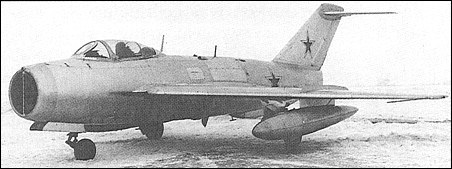 |
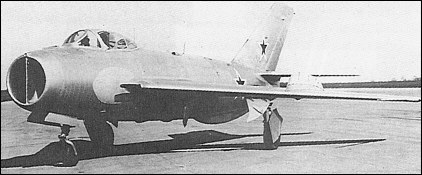
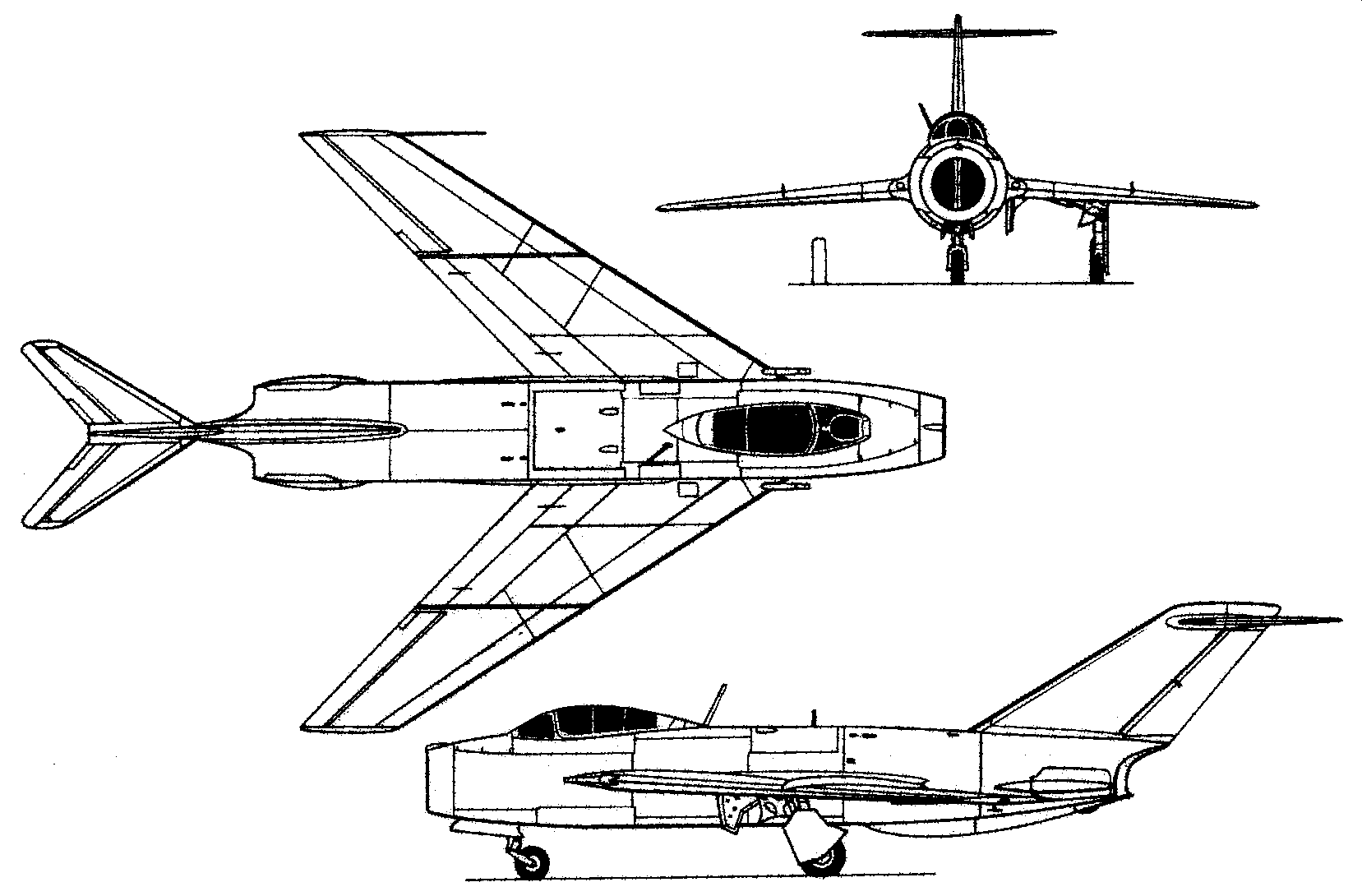
At the end of 1951, the MiG OKB had completed an adaptation of the MiG-17 airframe for a pair of 2600kg Mikulin AM-5 turbojets as the Izdeliye SM-1, or I-340. Purely an engine test bed, the SM-1 had demonstrated the efficacy of the side-by-side installation of the small-diameter turbojets, achieving speeds of 1193km/h at 1000m and 1154km/h at 5000m, an altitude attained in 0.94 min. The success achieved with the SM-1 determined choice of engine and power plant arrangement for the SM-2 single-seat fighter proposal embodying an essentially similar wing to that of the I-350 with 55° sweepback at quarter chord (60° at leading edge). Powered by two AM-5F turbojets each with an afterburning rating of 2700kg and having an armament of two 37mm N-37D cannon in the wing roots, the first SM-2 - by now assigned the official designation of I-360 - was flown on 24 May 1952. This was unique in having a T-type horizontal tail, and, on 25 June, it attained Mach=1.04 in level flight. Subsequent testing revealed that the wing tended to blanket the tailplane at high angles of attack, and, to rectify this deficiency, the tailplane was lowered to a mid point on the fin. Flight test (as the SM-2A) revealed little improvement and the surface was then further lowered to the base of the fin (as the SM-2B), this being accompanied by some increase in the vertical tail surface area, and satisfactory handling characteristics resulting. Nonetheless, the prototype was lost on its 132nd flight as a result of tail flutter. It was calculated that the maximum attainable Mach number of the fighter was 1.19, but no details of performance are available.
|  COMPANY PROFILE | ||||||||||||||||||||||||||||
|


|