 |
Yakovlev Yak-101945 |  |
| Virtual Aircraft Museum / USSR / Russia / Yakovlev | |
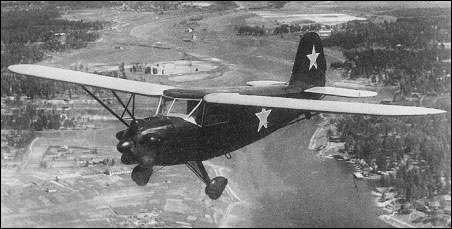 |
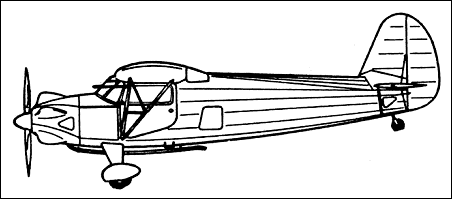
Originally designated Yak-14, this was a traditional, high-wing, cabin four-seater, resembling a modernised AIR-6. Powered by a 145hp M-11FM engine, the prototype had a braced wing with two wooden spars, ply ribs and ply/fabric covering. The fuselage was based on a truss of welded steel tube, with fabric covering except over the nose, door and baggage hatch which were D1. The tail and ailerons were D1/fabric. The non-retractable undercarriage was sprung by rubber, the braked 500 by 150mm main wheels having spats and the 200 by 80mm tailwheel being castoring. Chief engineer on the programme was G.I.Gudimenko. The military prototype was flown by programme pilot F.L.Abramov in January 1945, and showed unsatisfactory handling. After repeated (mostly minor) modifications, and the change in designation to Yak-10, it passed State testing in June 1945. Despite the fact that it was not allmetal it was accepted for production, and a factory at Dolgoprudnyi outside Moscow produced forty in 1946. These were fitted with the 160hp M-l 1FR engine and were built in two versions: Yak-10V (Vyvoznoi, carrier) dual-control four-seater. Yak-10S (Sanitarnyi) with seats for a pilot and medical attendant, and a long hatch on the left for loading a stretcher. In 1946 one aircraft was fitted with AIR-6 type floats. Designated Yak-10G (Gidro), it passed its Factory tests, but no data have been unearthed. In February 1947 a series aircraft was fitted with wooden Canadian skis 1,930 by 340mm, each weighing 20.25kg, and a tail ski weighing only 1.93kg, so that the empty weight was even less than normal. Bill Gunston & Yefim Gordon "Yakovlev Aircraft since 1924", 1997
|  COMPANY PROFILE | |||||||||||||||||||||||||||||||||||||||||||||
|


|