 |
Allied Aviation XLRA-11941 |  |
| ASSAULT GLIDER | Virtual Aircraft Museum / USA / Ahrens |
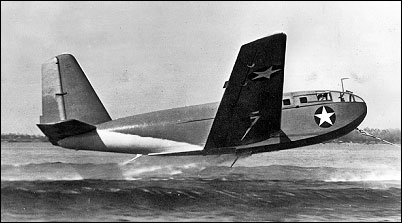 |
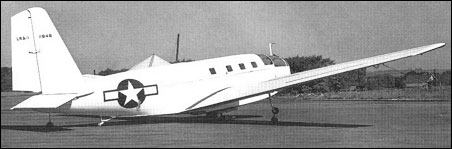
In April 1941, at the instigation of Captain (later Admiral) Marc Mitscher, the Navy began work on a glider for assaulting enemy beaches carrying squads of Marines. The basic design worked out by the Bureau of Aeronautics was then handed over to industry for building. The first was built by the Bristol Aeronautical Company as the XLRQ-1, followed by two from the Allied Aviation Corporation as the XLRA-1 and -2. The low-set wing supported the glider in the water, and tow-planes used in tests were amphibians such as the J2F-5 Duck and PBY-5A. Although the XLRA-11-2 was theoretically ideal for recapturing islands captured by the Japanese in the first months of the Pacific War, actual combat experience showed the strength of beach defences and the vulnerability of even armoured landing craft and amphibious vehicles during opposed invasions. In 1942 orders for 100 XLRA-2s were cancelled as was that for a 22-seat twin-hulled transport glider. FACTS AND FIGURES © In the US Navy's system, XLR stood for Experimental (X) Transport (R) Glider (L). Q was the designator for the Bristol Aeronautical Company and A stood for the Allied Aviation Corporation. © There were two versions of the Allied glider. The XLRA-1 was similar to die XLRQ-1 with a dual centre wheel and wingtip skids for land use and the XLRA- 2 had a jertisonable two-wheeled undercarriage so it could take off from land and alight on water. © The wing was called a 'float wing', as it combined both these functions without the need for additional wingtip floats. The hull design was of the two step planing type. © Construction was mainly wood with the fuselage and wing skins made of impregnated plywood. Companies who built gliders for the Navy included light aircraft makers and manufacturers of library shelves.
|  All the World's Rotorcraft | ||||||||||||||||||||||||||||||
|


|