|
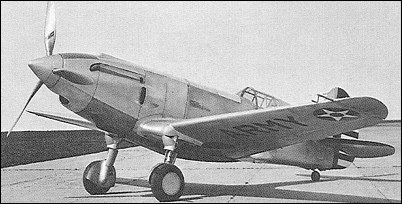
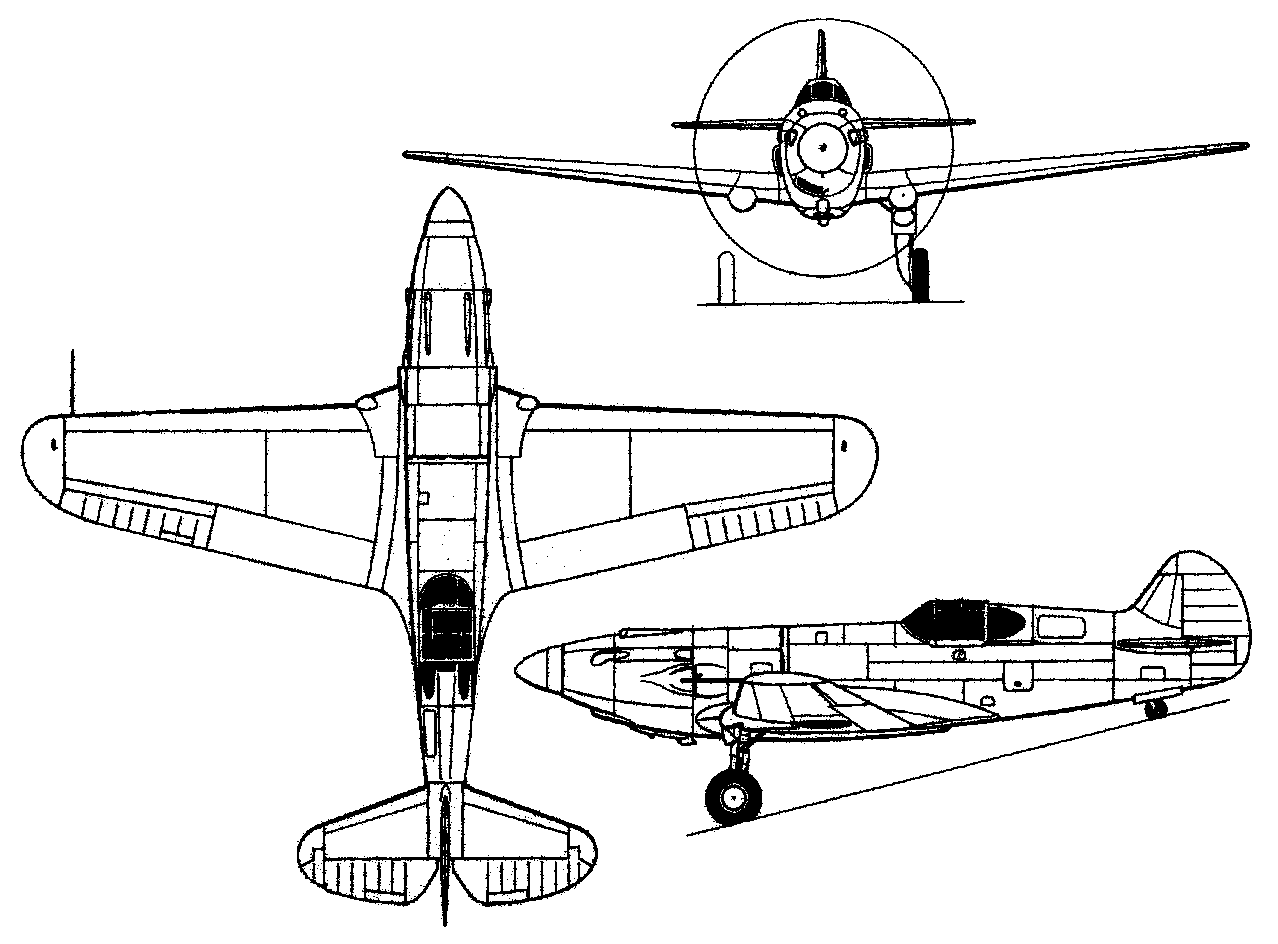
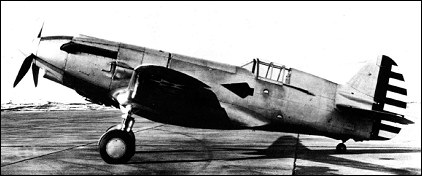
| The 'long-nosed' P-37 was a Curtiss attempt in the late 1930s to couple the P-36 Mohawk design with the 992kW Allison V-1710-21 inline engine. The result was a pursuit ship with some promise but with a few serious drawbacks, including poor visibility from its far-aft enclosed cockpit. The sole XP-37, ordered in 1937 with a supercharged V-1710-11 powerplant, was nothing more than a P-36 airframe with the engine change. It was quickly apparent that the pilot not only could not see well in flight but also on the ground he could scarcely see at all! It was hoped that some improvement would be offered by the 13 service-test YP-37 airframes which were 0.56m longer and had the V-1710-21 engine.
The YP-37 aircraft went through rigorous tests at Wright Field, Ohio, including gunnery tests, but the visibility problem was not resolved and the YP-37s were not as stable as Army pilots wanted. Serious consideration was given to further development, but at the time Curtiss was also about to come forth with the P-40 which offered an inline powerplant without the drawbacks. Though they contributed to knowledge gained by fighter designers and tacticians, the YP-37s never reached operational service as other types appeared with greater promise. As world conflict loomed, multi-role missions were now being foreseen for aircraft once intended solely to chase other aircraft, and machines capable of a range of combat functions would increasingly become known not as pursuit ships but as fighters.
 | A three-view drawing of YP-37 (1278 x 944) |
| WEIGHTS |
| Take-off weight | 3255 kg | 7176 lb |
| Empty weight | 2596 kg | 5723 lb |
| DIMENSIONS |
| Wingspan | 11.38 m | 37 ft 4 in |
| Length | 10 m | 33 ft 10 in |
| Height | 2.90 m | 10 ft 6 in |
| Wing area | 21.92 m2 | 235.94 sq ft |
| PERFORMANCE |
| Max. speed | 547 km/h | 340 mph |
| Ceiling | 10360 m | 34000 ft |
| Range | 1400 km | 870 miles |
| ARMAMENT | 1 x 7.62mm + 1 x 12.7mm machine-guns |
| Stan Keller, e-mail, 01.07.2008 04:48 Originally the P-37, P-38 and P-39 were to be turbo supercharged. The space required for the turbo and intercooler
resulted in the aft cockpit placement configuration of the P
-37
The XP-37 differed slightly from the YP-37, but both were turbo supercharged. reply |
|
Do you have any comments?
|
| 
COMPANY
PROFILE
All the World's Rotorcraft
|