 |
Piper PA-31 Navajo1964 |  |
| SIX/EIGHT-SEAT CORPORATE/COMMUTER TRANSPORT | Virtual Aircraft Museum / USA / Piper |
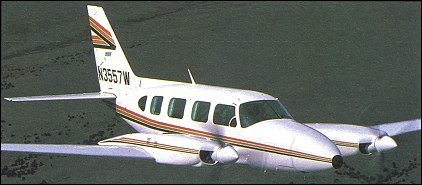 |
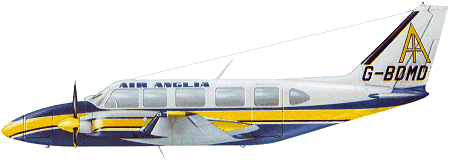
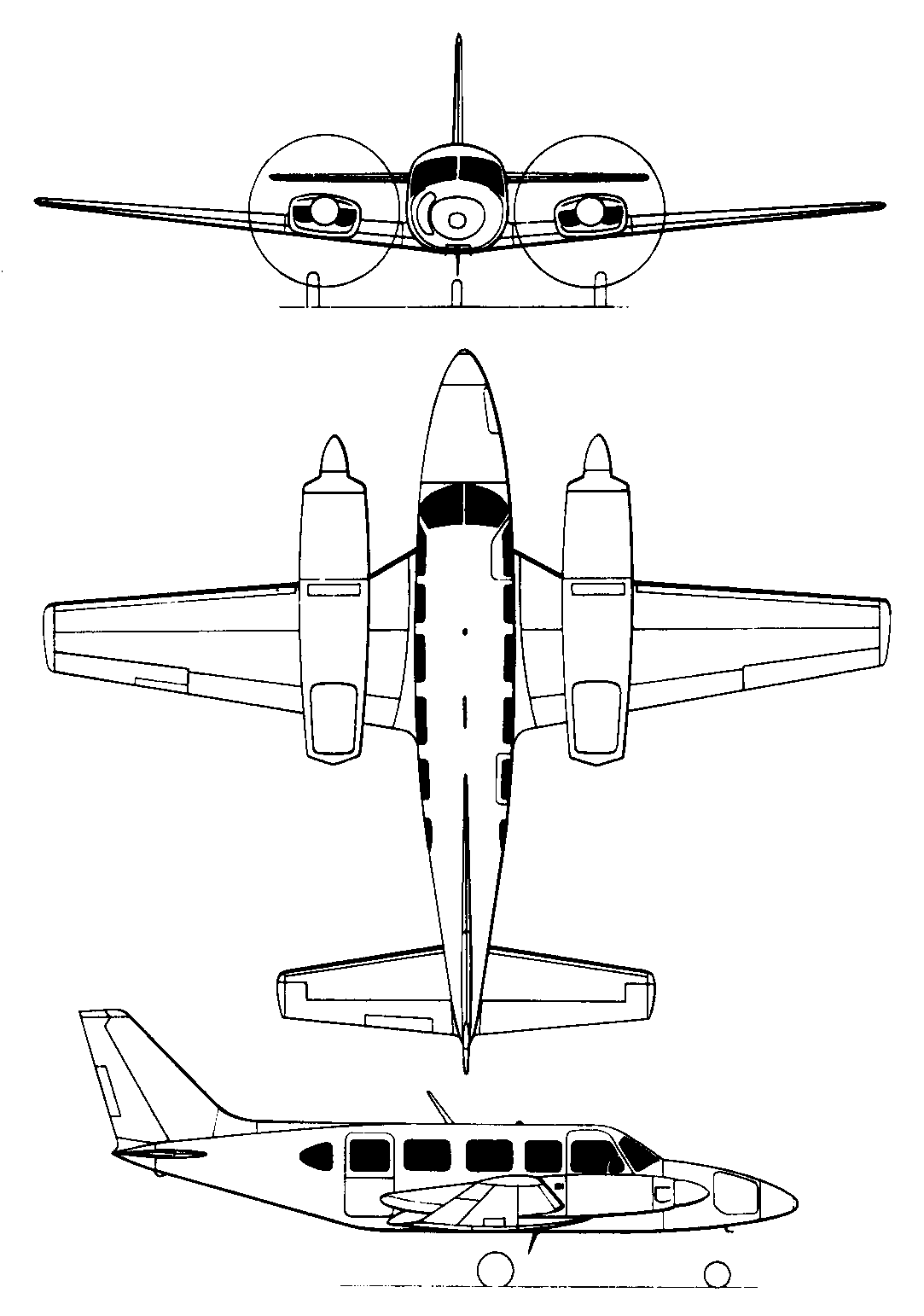
On 30 September 1964 Piper flew the prototype of a new twin-engine executive aircraft which was then the largest built by the company. Identified at first as the Piper PA-31 Inca, the aircraft had been redesignated as the PA-31 Navajo when deliveries began on 17 April 1967. A six/eight-seat corporate/ commuter transport of cantilever low-wing monoplane configuration with retractable tricycle landing gear, it was powered by two 224kW Avco Lycoming IO-540-K flat-six engines, and was available in optional Standard, Commuter and Executive versions with differing interior layouts. Made available at the same time was the optional PA-31T Turbo Navajo, which differed only by having two 231kW TIO-540-A turbocharged engines, and the range was extended in 1970 by introduction of the PA-PA-31P Pressurized Navajo with a fail-safe fuselage structure in the pressurised section and two 317kW Avco Lycoming TIGO-541-E1A engines. Production of the PA-31 Navajo ended during 1972 and at the same time the company introduced for 1973 the PA-31-350 Navajo Chieftain which, by comparison with its predecessor, had the fuselage lengthened by 0.61m and was powered by two 261kW TIO-540-J2BD turbocharged engines driving counter-rotating propellers. A significant advance in the Navajo family came on 22 October 1973 when Piper flew the first production example of the PA-31T Cheyenne, which combined an airframe generally similar to that of the Pressurized Navajo with two 462kW Pratt & Whitney Aircraft of Canada PT6A-28 turboprop engines. In the following year an additional model of the Turbo Navajo was made available, the PA-31-325 Turbo Navajo C/R, which introduced a 242kW version of the counter-rotating engines installed in the Chieftain. Production of the PA-31P Pressurized Navajo ended during 1977, at which time a total of 248 had been built, but at the same time the company introduced a new version of the Cheyenne, the PA-31T-1 Cheyenne I, the original Cheyenne then becoming redesignated PA-31T Cheyenne II. Deliveries of the new Cheyenne I, which differed primarily from its predecessor by having 373kW Pratt & Whitney Aircraft of Canada PT6A-11 turboprop engines, began towards the end of April 1978. The Cheyenne range was extended for 1981 by introduction of the PA-31T-Cheyenne IIXL, with the fuselage lengthened by 0.61m and 559kW Pratt & Whitney Aircraft of Canada PT6A-135 engines flat-rated to 462kW. In 1982 production of the PA-31 Navajo terminated after 1,317 had been built. Later production versions of the Navajo family include the PA-31-325 Navajo C/R, PA-31-350 Chieftain and the PA-31T-1 Cheyenne I, PA-31T Cheyenne II and PA-31T-2 Cheyenne IIXL. However, the loss of the Navajo was compensated for in 1983 by introduction of the PA-31P-350 Mojave, which basically combined the airframe of the Cheyenne II with the powerplant of the PA-315-350 Chieftain.
Rob Crimmins, e-mail, 16.03.2021  Daniel DanielI’m building a mock up of a PA 31-300 door for our drop zone. Skydivers will use it to practice their exits. I need drawings of the fuselage cross sections through the door and at the fuselage at A few stations to the aft cabin bulkhead And forward to about six feet from the door frame. Can you help me out?
Paul Rosendahl, e-mail, 29.12.2023 Bob RobinsonHello Bob, have you ever found any info on N9183Y. I flew freight Mario bedayo, e-mail, 01.08.2021 Bob LeonardHI! Bob Mario Here from the philippines in new to Navajo chieftain, May i know your style for descent regarding shock cooling? and also the power setting you use in the Chieftain after airborne and continues climb the fuel flow , the cruise power setting and and fuel flow also Thanks regards.
|  COMPANY PROFILE | ||||||||||||||||||||||||||||||||||||||||||||||||||||||||
|


|
HI! Jose How are you may i ask you a favor im new to this Piper Navajo chieftain, May i know your Power setting in climb., cruise and fuel flow, and also the Hot start procedures as i find a hard time sometimes starting when hot after 15-20 min. Thanks and regards.
reply